A2 Ghee vs Organic Ghee: The Difference, and Which to Buy
A2 ghee vs organic ghee: A2 is about the cow's breed, organic is a certificate on how the farm is run, and one jar can be both, either, or neither. In ghee, neither label changes the fat or the taste. A2 decides the type of about 14 mg of milk protein in a teaspoon; organic caps insecticide residues at 5% of the usual legal limit. Pay for the one that answers your worry, and check it on the jar.
A2 ghee vs organic ghee: what is the difference?
A2 tells you which cow the milk came from. Organic tells you how that cow's farm was run and that a certifier checked it. They answer two separate questions, so an organic jar can be A1 and an A2 jar can be sprayed-fodder milk. For ghee, which USDA lists at 99.5 g of fat per 100 g, both labels change very little on your plate.
Most pages on this question stop at "genetics vs farming" and then tell you A2 fixes bloating. We looked at what each label legally means in India and what it changes in a 5 g teaspoon. The table is the short version.
What
A2
Organic
What it is about
A2: The cow's breed and genes: which form of one milk protein (beta-casein) the milk carries
Organic: How the farm is run: fodder, land, inputs, and records, checked by a certifier
Who checks it
A2: Nobody by law. No FSSAI standard or certificate for A2
Organic: An accredited body under NPOP, or a PGS-India farmer group
What proves it on the jar
A2: A named breed (Gir, Sahiwal), a herd A2 test if the brand shares one
Organic: India Organic logo, certifier's name and accreditation number, or "PGS-Organic" and group ID
What it changes in a teaspoon
A2: The type of about 14 mg of milk protein
Organic: The legal ceiling for insecticide residues: 5% of the usual limit
Fat, calories, taste, smoke point
A2: No change
Organic: No change
Buffalo ghee
A2: Always A2: buffalo carry no A1 gene
Organic: Only if certified, same as cow
FSSAI Organic Foods Regulations 2017 and Jaivik Bharat guidance; USDA FoodData Central (173412); de Oliveira et al., 2021. Checked 29 September 2026.
Can a ghee be both A2 and organic?
Yes, and it can be neither. Because breed and farm are separate, every jar on the shelf falls into one of four boxes:
A2 and certified organic
Indian-breed milk from a certified farm: both checks on one jar.
A2, not certified organic
Indian-breed or buffalo milk from farms without a certificate. Our own jars sit in this box.
Certified organic, not A2
Crossbred or Jersey-type herds on a certified farm. Clean on paper, mixed A1 and A2 protein.
Neither
A jar that names no breed and shows no certificate, like many dairy pouches and tins.
The third box is the one that catches people: a certified organic jar from crossbred cows is clean on paper and still carries A1 protein. If you bought organic to get A2, read the breed line too. What the A2 label means on its own, and the kitchen side of it, is on what is A2 ghee.
What does A2 change in a teaspoon of ghee?
Only the type of a tiny amount of protein. USDA FoodData Central lists 0.28 g of protein per 100 g of ghee (butter oil), about 14 mg in a 5 g teaspoon. The same database gives whole milk 3.15 g per 100 g, so a 200 g glass of milk holds about 6.3 g, some 450 times more protein than the teaspoon of ghee.
A1 and A2 are two forms of beta-casein, one of the milk proteins. Which one a cow makes depends on her genes. A 2023 study in Animal Biotechnology tested 1,000 milk samples from Indian cattle: in seven Indian breeds 80% of cows were A2A2 and none were A1A1, and Gir came out highest at 93% A2A2. In Jersey and Holstein-Friesian cows only 3% were A2A2. Buffalo are simpler still: a 2021 study genotyped 657 buffaloes and found every one A2A2.
So the A2 question matters in milk, curd, and paneer, where there are grams of protein. In ghee the whole argument is about milligrams. In August 2024 FSSAI told dairy brands that A2 claims on milk fat products are misleading, since A1 and A2 differ only in a protein, then withdrew the advisory five days later for more consultation, per All India Radio News and The Wire. The digestion trials and their funding are laid out on A2 vs A1 ghee.
Is A2 ghee better for digestion than organic ghee?
Neither label is a digestion fix in ghee. If milk upsets your stomach, lactose is the usual cause, and ghee carries very little of it whether it is A2, organic, or neither; the amounts are on A2 ghee and lactose intolerance. A true milk allergy is different: the trace protein matters, A2 does not make it safe, and an allergist decides. The protein trace is covered on does ghee have casein. If any ghee leaves you heavy, the usual reason is the amount, or a stale or undercooked jar.
What does organic change in ghee?
Mainly the legal ceiling for pesticide residues, and an outside check on the farm. Under FSSAI's Organic Foods Regulations 2017, organic food must meet all the usual food rules, except that insecticide residues may be at most 5% of the normal maximum limit, or the lowest level a lab can measure, whichever is higher. The fat, calories, and cooking are the same as any ghee.
The residue question is fair for ghee, because many pesticides dissolve in fat and follow the milk fat into the pot. A 2016 study tested 56 ghee samples from three regions of Punjab: HCH (an old organochlorine pesticide) turned up in 23% and DDE (what DDT breaks down to) in 25%, and none of the samples was above the legal limits. So ordinary ghee in that survey had traces within the law. Organic ghee is held to a ceiling twenty times lower, or the lowest level a lab can measure.
To sell food as organic, FSSAI requires certification under one of two systems: NPOP, where an accredited body inspects the farm, or PGS-India, where local groups of farmers and buyers check each other's farms. The organic certificate covers the farm, not the cow's breed, and not how the ghee is cooked. What a grass diet changes in the fat itself (omega-3, CLA, colour) is on grass-fed vs regular ghee.
How do you check an organic ghee claim?
Look for four things on the jar itself. FSSAI's Jaivik Bharat guidance says certified organic food carries the FSSAI logo and licence number, the India Organic logo, the word "Organic" on a single-ingredient food like ghee, and the name, logo, and accreditation number of the body that certified it. Ghee certified through a farmer group says "PGS-Organic" and shows the group's ID instead.
Three things look like a certificate and are not. A company name with "Organic" in it is a name; one such case is worked through on is Two Brothers ghee organic. "In-conversion to organic" means the farm is still on its way, and FSSAI's rules bar the organic logo on it. And a small producer who sells straight to you is exempt from certification, so a village seller may say organic with no logo at all; then you are trusting the farm, and a visit is your check.
Buying for the face and hair rather than the kitchen? Whether a logo matters there is on best ghee for skin and hair.
How do you check an A2 ghee claim?
There is no A2 certificate to look for, so you check the breed. FSSAI has no A2 standard for ghee, and no logo exists. A useful A2 claim on cow ghee names the breed: Gir, Sahiwal, Tharparkar. "A2 desi cow" with no breed tells you less, because "desi" has no fixed meaning. If a brand says its herd is A2-tested, ask to see the test before you pay extra for it.
Buffalo ghee needs no A2 check at all, since buffalo carry no A1 gene. And A2 says nothing about the method. Whether the ghee was made from curd or cream changes the smell, grain, and price far more; the curd method is explained on the Bilona method, and our Ghee Lab counts how many packs print A2, breed, and method claims in the Ghee Claims Report.
"Is it pure, how do I check?" is one of the questions we get most on WhatsApp, often from someone holding a jar that says A2 or organic. Our answer is the same each time: the label is where checking starts. The home checks for the jar itself are on how to identify pure ghee.
A2 or organic: which matters more?
It depends on your worry. For pesticide residues, organic is the label that speaks to it. For A1 protein, A2 is, though in ghee the amount is tiny. For taste and freshness, neither: look at the method and the date.
Choose certified organic ghee if
- Pesticide residues are your main worry and you want a legal limit twenty times tighter.
- You buy from shops and cannot see the farm, so a certifier's check is the proof you have.
- The jar shows the India Organic logo and the certifier's number, not just the word.
Choose A2 ghee if
- You want ghee from Indian-breed cows for its own sake, and the jar names the breed.
- You also drink milk or eat paneer from the same source, where A2 protein is measured in grams.
- You like buffalo ghee: it is A2 anyway, and usually costs less than A2 cow ghee.
Three kitchens, three answers
A parent buying the daily spoon for dal and roti. Pick a fresh curd ghee that names its animals and shows you the batch; add organic if residues worry you and the logo is on the jar. The spoon matters more than the stamp: at home we eat 1 to 2 teaspoons each a day, on roti, dal, and khichdi.
Someone told A2 will stop their bloating. In ghee it holds about 14 mg of protein a teaspoon, so do not expect it. Look at lactose, the amount, and the rest of the meal first, and see a doctor if bloating keeps coming back.
A home that fries puris and makes sweets for a festival. Neither label earns its price in a kadhai. Fry in oil, and use buffalo ghee for halwa and ladoo; it is A2 anyway.
Why does A2 or organic ghee cost more?
Mostly because of the milk and the method, not the label. In our September 2026 price check, cow ghee with "A2" in the product name had a median of ₹2,399 a litre, about ₹12.0 a teaspoon, and cow ghee without it had a median of ₹804, about ₹4.0 a teaspoon.
Ghee Price Index, September 2026: each brand's own shop page, or BigBasket where the brand does not sell the pack itself; our own live price.
| Item | Value |
|---|---|
| Authentic Urban A2 Gir cow ghee (Bilona) | ₹2,399 a litre |
| Cow ghee with "A2" in the name, median of 7 | ₹2,399 a litre |
| Cow ghee without "A2" in the name, median of 15 | ₹804 a litre |
At two teaspoons a day, that gap is about ₹16 a day for one person. Every A2-named pack in the check was also sold as made from curd, so the gap pays for Indian-breed milk and the slow method together. Our index does not record organic logos, so we have no fair median for certified organic ghee; brand by brand prices are in our Ghee Price Index, September 2026.
Here is where our own price goes. About 30 to 35 litres of Gir cow milk make 1 kg of our cow ghee. The milk is set to curd overnight, churned for 30 to 45 minutes, and the makkhan cooked on a wood chulha, the better part of two days from curd to jar. The full rupee breakdown is on why A2 Bilona ghee is expensive.
Mistakes people make with A2 and organic labels
- Reading organic as A2. The certificate is about the farm, not the breed.
- Reading A2 as organic. Indian-breed milk can come from fodder grown with pesticides.
- Trusting a name. "Organic" in a brand name, or a green leaf, is not a certificate.
- Paying extra for "A2 buffalo ghee". All buffalo ghee is A2.
- Buying either label for weight loss or the heart. A teaspoon of any ghee is the same fat. The label changes nothing there.
- Forgetting freshness. A certified jar that smells stale is worse than a fresh uncertified one.
A2 and organic ghee label check: 7 points
Save or screenshot this before you buy.
- 1 Organic: the India Organic logo, the FSSAI logo and licence number, and the certifier's name and accreditation number are all on the jar. For a farmer group, "PGS-Organic" and the group's ID.
- 2 Organic: "Organic" in the company name, a leaf, or "natural" is not a certificate. Neither is "in-conversion to organic", which may not carry the organic logo.
- 3 A2 cow ghee: the breed is named (Gir, Sahiwal, Tharparkar), not just "desi" or "A2".
- 4 A2: buffalo ghee is A2 by nature. A brand charging extra for "A2 buffalo ghee" is selling you a word.
- 5 Method: the jar says curd (Bilona) or cream. A2 and organic say nothing about how the ghee was cooked.
- 6 Licence: the FSSAI number checks out on foscos.fssai.gov.in, and the name and address match the brand.
- 7 Proof you can see: a farm visit, a video of the batch, or a monthly test against the FSSAI ghee limits.
Which A2 ghee do we keep at home?
Whichever jar you pick, ask what the label cannot tell you: which animals, which method, and when it was made. Warm a spoon: it should smell of toasted milk, not wax or smoke. Curd ghee often cools grainy, and cow ghee turns more yellow in the monsoon when the animals eat green fodder. Our full ranking of cow ghee jars is on best cow ghee in India.
We make both jars below, and neither is certified organic. Our A2 Gir cow ghee is from Gir cows only, and our Jafarabadi buffalo ghee is A2 by nature. Our animals and our partner farmers' animals graze near the Gir forest, with no hormone injections, and a vet visits every partner farm daily. Each jar is cooked after you order, Varsha tastes every batch, and you get a video of yours on WhatsApp. We test every month against the FSSAI limits, and anyone can visit; see how we make ghee.
Gir cow ghee: the daily teaspoon
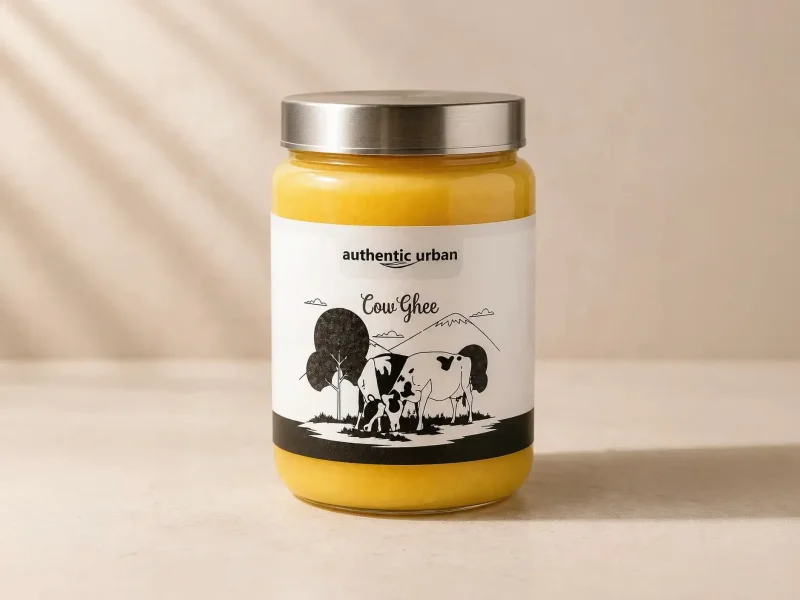 1 Litre
Buffalo ghee: paratha and halwa
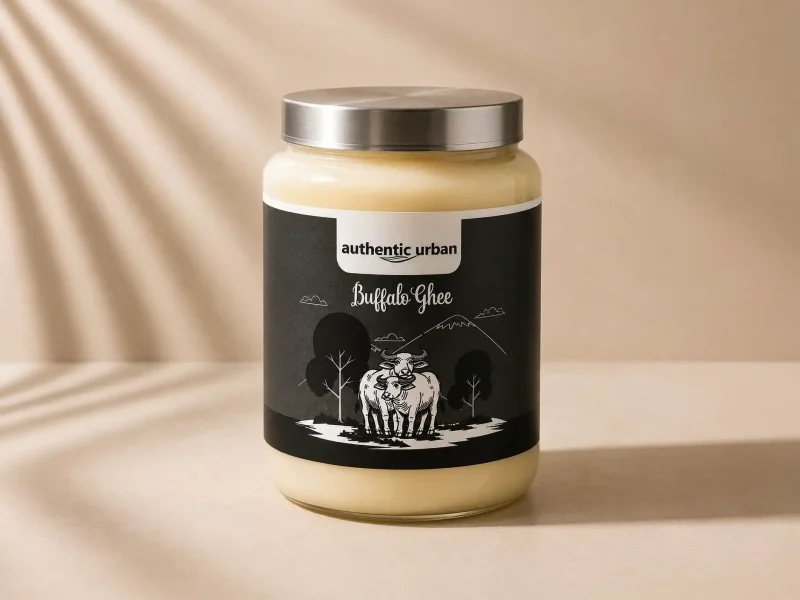 1 Litre
Each order is cooked after you place it, and the packing video is of that batch. Past order videos are on the shop.
FAQ
Which is the best A2 or organic ghee in India?
We put our own A2 Gir cow Bilona ghee first. It is not certified organic. Our Gir cows and Jafarabadi buffalo are grass-fed village animals near the Gir forest, with no hormone injections, and each jar is cooked after you order, with a video of your batch on WhatsApp. If you want certified organic, pick a jar that shows the India Organic logo and the certifier's number.
Is buffalo ghee A2?
Yes. A 2021 study genotyped 657 buffaloes of four breeds and every one carried only the A2 form of beta-casein, so buffalo milk, butter, and ghee are A2 by nature. That is why buffalo ghee packs rarely print "A2": there is no A1 buffalo ghee to set it against. Buffalo ghee is whiter, firmer, and richer in taste than cow ghee, and the A2 label adds nothing to it.
Is organic ghee better for babies and children?
Not in fat, calories, or vitamins: the ghee is the same food. The one legal difference is a much lower ceiling for insecticide residues, which some parents want for a child who eats ghee every day. For a child over one year, a small spoon of any pure ghee on dal or khichdi is the usual Indian way. For a baby under one, ask your paediatrician when and how to add fat.
Is desi ghee the same as A2 ghee?
Not always. "Desi ghee" in India often just means pure ghee, or ghee from an Indian cow, and the word has no legal meaning. Ghee from Indian breeds like Gir and Sahiwal is almost always A2, but a jar saying "desi" may still be made from crossbred cow milk or mixed milk. Look for the breed named on the jar, or choose buffalo ghee, which is A2 anyway.
Does organic or A2 ghee taste different?
Neither label changes the taste much. Taste comes from how the ghee is made and how fresh it is. Curd ghee cooked slowly smells of toasted milk and often cools grainy; cream ghee tastes flatter. Cow ghee from green-fodder months is more yellow and fresher-smelling. A burnt or old jar tastes bad whatever certificate or breed is on the label, so warm a spoon and smell it.
Can a small farm sell organic ghee without a certificate?
FSSAI's organic rules exempt a small producer who sells straight to the end consumer from NPOP or PGS certification, and the size limit is set by FSSAI. With no certification, there is no certifier name or number to print on the jar, so you are trusting the farmer. Ask to see the farm, the fodder, and the animals before you pay extra.
About the editorial team
Authentic Urban TeamBilona ghee makers, Gir Somnath, Gujarat
We are the Parmar family in Gir Somnath, Gujarat. We have made ghee here since 2016 and sold it online since 2025. We make only Bilona ghee, test it every month, and anyone is welcome to visit and watch it being made. Our Gir cows and Jafarabadi buffalo are grass-fed village animals that graze near the Gir forest, with no hormones or milk boosters. We set their milk to curd, churn it, and cook the makkhan on a wood chulha. These articles come from that kitchen and from what customers ask us on WhatsApp. We are ghee makers, not doctors.
Sources
- Food Safety and Standards (Organic Foods) Regulations, 2017, compendium version I (22.10.2021): regulations 4, 5, and 7, FSSAI. Checked 29 Sep 2026.
- Consumer Guidance: how to identify certified organic food (NPOP and PGS-India labels), FSSAI, Jaivik Bharat. Checked 29 Sep 2026.
- Occurrence and spatial distribution of pesticide residues in butter and ghee (clarified butter fat) in Punjab, India (Bedi JS et al.), 2016, Environmental Monitoring and Assessment. Checked 29 Sep 2026.
- Butter oil, anhydrous (FDC ID 173412), SR Legacy: protein per 100 g, USDA FoodData Central. Checked 29 Sep 2026.
- Milk, whole, 3.25% milkfat (FDC ID 171265), SR Legacy: protein per 100 g, USDA FoodData Central. Checked 29 Sep 2026.
- Potential status of A1 and A2 variants of bovine beta-casein gene in milk samples of Indian cattle breeds (Khan R et al.), 2023, Animal Biotechnology. Checked 29 Sep 2026.
- Water buffaloes (Bubalus bubalis) only have A2A2 genotype for beta-casein (de Oliveira LSM et al.), 2021, Tropical Animal Health and Production. Checked 29 Sep 2026.
- FSSAI orders removal of A1 and A2 claims from all packaging of milk and dairy products, August 2024, All India Radio News. Checked 29 Sep 2026.
- FSSAI withdraws advisory on A1 and A2 labelling of milk, calls for further consultation, The Wire. Checked 29 Sep 2026.