Gond Ke Ladoo Recipe in Grams, and Calories per Ladoo
This gond ke ladoo recipe puffs 80 g of gond (edible gum) in ghee, roasts 240 g of atta in more ghee for about 20 minutes, then folds in almonds, cashews, coconut, and 200 g of sugar or jaggery once the pan is warm. It makes 20 ladoos. Each one is about 258 kcal and holds 3 teaspoons of ghee, so one a day is the portion, and half is enough for most people.
How do you make gond ke ladoo?
Fry the gond in ghee until it puffs like popcorn, crush it, roast the atta slowly in the rest of the ghee, mix in the gond and nuts, and add the sugar only once the pan is warm. Press the warm mix into balls. Allow about 70 minutes; the gond and the atta roast are the two steps that decide the ladoo.
One ladoo, a twentieth of the batch (about 49 g): 258 kcal, 3 g protein, 19.3 g fat (10.9 g saturated), 20.5 g carbohydrate, and 10.2 g sugar, worked out from USDA FoodData Central for each ingredient. Gond has no USDA entry and is not counted, so the real figure is a little higher.
This is the ladoo Rajasthan, Gujarat, and Maharashtra make when the cold sets in, and the one many families send to a new mother. In Maharashtra it is dink ladoo. At home in Gir Somnath, where we make ghee, our winter sweets are adadiya pak and gond, the Gujarati cousins of this ladoo. If you want the same ingredients loose, eaten by the spoon, that is panjiri. Gond ladoo is food, not medicine: it gives calories and fat, and the portion section below matters more than any claim made for it.
Gond ke ladoo ingredients in grams
Atta, ghee, and sugar in roughly 24 : 30 : 20 by weight, with 80 g of gond and 160 g of nuts and seeds. Weigh the ghee after it melts; a spoon from a cold, grainy jar holds much more than it looks.
Ingredient
Amount
What it does
Whole wheat atta, coarse if you can get it
240 g (2 cups)
The base that holds the ladoo. Roasted in ghee until nutty.
Ghee
300 g (about 1½ cups, 350 ml)
120 g to fry the gond and nuts, 180 g to roast the atta.
Gond (edible gum), small crystals
80 g (about ½ cup)
Puffed in ghee for the crunch. The reason for the name.
Powdered sugar or bura
200 g
Or powdered jaggery. Goes in only when the mix is warm, not hot.
Almonds and cashews
50 g each
Fried light golden, chopped or crushed coarse.
Desiccated coconut (dry, unsweetened)
40 g
Toasted for 1 minute. Softens the bite.
Magaz (melon seeds)
20 g (2 tbsp)
Roasted until they pop.
Cardamom powder
1 tsp
Stirred in with the sugar.
Which gond to buy: gond or gond katira?
Buy plain gond, the gum of the babool (acacia) tree: pale yellow to amber, glassy crystals that puff in hot ghee. Gond katira looks similar in the shop but is a different gum. It does not puff in ghee; it swells into a jelly in water and goes into summer sherbets. If your gond sits in the ghee and never swells, this is the usual reason.
Pick small crystals, about the size of a chickpea or smaller, so they puff through to the middle. Break large lumps in a mortar before frying. Clean gond has no bark or grit; pick out any you see, because it will not soften.
Gond ke ladoo recipe, step by step
The whole recipe is six stages, and two of them need your full attention: the gond, which takes seconds to go wrong, and the atta, which takes 20 minutes of stirring.
Stage
Heat
Time
Done when
Gond
Medium, then low
2 to 3 min a batch
Swollen white like popcorn; one piece crushes to powder between your fingers.
Almonds and cashews
Low
3 to 4 min
Light golden and smelling toasted.
Coconut and magaz
Low
1 min
Magaz puff and pop; coconut just turns cream-coloured.
Atta (bhunai)
Low to medium, stir all the time
18 to 22 min
Golden brown, smells of roasted wheat, ghee shows at the edges.
Cool
Off the flame
10 to 15 min
Warm enough to shape, cool enough to hold your palm on it.
Shape
None
10 min
A fistful pressed hard holds as a ball. Twenty balls of about 49 g.
1. Puff the gond in ghee (2 to 3 minutes a batch)
Heat 120 g of ghee in a small, deep kadhai on medium, so the ghee stands deep enough to cover a handful of gond. Drop in one crystal. It should rise and turn white within 2 to 3 seconds; if it sinks and sits, the ghee is too cool, and if it browns at once, too hot. Fry a small handful at a time, stirring, until every piece has swollen to two or three times its size. Crush one between your fingers: it should break to powder with no sticky centre. Lift it out with a slotted spoon and let the ghee drain back.
Keep your face and hands back from the pan. Gond crackles as it swells and flicks hot ghee. Ghee is only ghee once all the water in the makkhan has boiled off, which is why a ghee splash is hotter than a splash of boiling dal and burns worse. We learn that at our own chulha every winter.
2. Fry the nuts, coconut, and magaz (about 5 minutes)
Turn the flame to low. Fry the almonds and cashews in the same ghee for 3 to 4 minutes until light golden, then lift them out. Add the coconut and magaz together for about a minute, until the magaz pop and the coconut is just cream-coloured. Coconut burns in seconds, so it goes in last and comes out first.
Crush the cooled gond with the base of a katori or a rolling pin over a cloth. A mixer turns it to dust and you lose the crunch. Chop the nuts coarse by hand, or give them two short pulses.
3. Roast the atta in ghee (18 to 22 minutes)
Pour the rest of the ghee, 180 g, into a heavy kadhai with whatever is left in the gond pan, and add the atta. It looks like damp sand at first. Keep the flame on low to medium and stir from the bottom without a break. By 10 minutes it loosens and smells of dough; by 18 to 22 minutes it is golden brown, the ghee shows at the edges, and the kitchen smells of roasted wheat. Pale atta tastes raw however much sugar goes in.
Trust your nose here, the way we do at the matki. When we cook makkhan into ghee, it comes off the flame when the bubbling goes quiet and it smells of toasted milk. A few minutes more and the batch turns dark and bitter, and it never goes into a jar. Atta in ghee has the same edge: nutty is done, sharp is burnt, and burnt cannot be saved.
4. Cool, sweeten, and shape (about 25 minutes)
Turn off the flame and mix in the gond and nuts. Leave the kadhai for 10 to 15 minutes, stirring now and then, until you can hold your palm on the mix. Add the sugar or jaggery and the cardamom and mix with your hands. Take about 49 g, a large lime's worth, squeeze it hard in your fist, then roll it smooth. The ladoos are soft now and firm up as the ghee sets.
If the mix cools before you finish and will not hold, warm the kadhai on low for a minute. Do not add water or milk to help it bind; water is what makes a ladoo spoil.
Why is my gond chewy, or my ladoo not binding?
Chewy gond was fried in ghee that was too hot or crowded, and a ladoo that will not bind has gone cold or is short of ghee. Both are fixable if you catch them before the sugar goes in. Find your problem below.
Gond is chewy or sticky in the middle
Why: The ghee was too hot, so the outside set before the centre puffed, or the pan was crowded and the ghee cooled.
Fix: Fry the chewy pieces again on low, a few at a time, until they crush to powder. Next time test one crystal first and fry a small handful at a time.
Gond stayed small and glassy, never puffed
Why: Too little ghee to cover it, or the ghee was not hot enough. Or it is gond katira, which does not puff.
Fix: Use a small, deep kadhai so 120 g of ghee covers the crystals. If it is katira, keep it for summer drinks and buy acacia gond.
Ladoos crumble and will not bind
Why: The mix went cold, or there was too little ghee for the atta.
Fix: Warm the mix for a minute on low, or add 1 to 2 tbsp of melted ghee, and press each ladoo hard in your fist before rolling it.
Wet, sticky, or lumpy with sugar
Why: Sugar or jaggery went into hot atta and melted.
Fix: Spread the mix on a thali to cool, rub out the lumps, then shape. Wait until the pan is warm, not hot, before any sugar.
Tastes raw or floury
Why: The atta came off pale, or was roasted on high so the outside browned first.
Fix: Before the sugar goes in, put it back on low for 5 to 8 minutes until it smells of roasted wheat.
Oily, ghee pools on the plate
Why: Too much ghee for the atta, often scooped from a cold, grainy jar.
Fix: Roast 30 to 40 g more atta dry and mix it in. Next time weigh the ghee after it melts.
The atta roast and the warm-not-hot sugar rule are the same as in besan ladoo, which has more on when to add sugar and how bura behaves.
How many gond ladoos can you eat a day?
One a day at most, and half a ladoo for most adults who sit through the day. One ladoo from this recipe holds about 15 g of ghee (3 teaspoons) and 10 g of sugar. ICMR-NIN's 2024 dietary guidelines ask adults to limit ghee or butter to 1 to 2 teaspoons a day and sugar to 25 to 30 g a day.
Portion
kcal
Ghee
Sugar
What it means
Half a ladoo, about 25 g
129 kcal
Ghee 7.5 g (1½ tsp)
Sugar 5 g
Inside ICMR-NIN's ghee line for the day, with room for a little on dal.
One ladoo, about 49 g
258 kcal
Ghee 15 g (3 tsp)
Sugar 10 g
The day's ghee in one piece. Skip the spoon on roti and dal that day.
Two ladoos, about 98 g
516 kcal
Ghee 30 g (6 tsp)
Sugar 20 g
More than a sedentary woman's whole day of visible fat, and most of the sugar line.
From the batch in this recipe, 980 g raw. USDA FoodData Central: atta 168893, ghee 173412, powdered sugar 169656, almonds 170567, cashews 170162, desiccated coconut 170170, magaz 169407. Gond not counted. Checked 28 September 2026.
The same guidelines put a sedentary adult woman at about 20 g of visible fat a day in total, all oil, ghee, and butter together, and a sedentary man at 30 g. Two ladoos pass that before a single tadka. Gond ladoo comes to over 500 kcal per 100 g, and ICMR-NIN treats cooked food above 250 kcal per 100 g as high in fat or sugar. That is why it stays a one-piece food, with warm milk in the morning or after lunch, not a snack to reach for all day. How a family splits its daily ghee is on how much ghee per day.
Gond ladoo after delivery
ICMR-NIN asks that visible fat be kept down while breastfeeding, and one ladoo already holds more ghee than the 1 to 2 teaspoon line for the day. So a new mother gets half a ladoo or one, not two or three, with the dal and roti that day cooked light. When to start ghee after a normal birth or a C-section, and how much in the first 40 days, is on ghee after delivery; whether it makes more breast milk is on ghee for breastfeeding. If she had gestational diabetes, a complicated birth, or has been told to watch her weight or cholesterol, her doctor sets the portion.
Families also give gond ladoo for the back and joints. That is tradition, not a tested remedy, and pain that lasts needs a doctor. Where ghee does and does not fit in joint pain is on ghee for joint pain. For diabetes, the ladoo counts as the meal's carbohydrate; see can diabetics eat ghee.
Can you make gond ladoo with less ghee, or with jaggery?
Yes to both. For a lighter batch, use 180 g of ghee instead of 300 g and 150 g of sugar instead of 200 g. Each ladoo drops to about 196 kcal, 9 g of ghee, and 7.8 g of sugar (13.4 g fat, 7.2 g saturated), and it still holds.
The gond still needs its 120 g of ghee to puff, so the saving comes from the atta. Roast it in 60 g of ghee plus whatever is left in the gond pan, on the lowest flame with steady stirring; it browns faster with less fat, so check it from 12 minutes. The ladoos are drier and need a harder squeeze. Do not go lower than this, or they crumble in the jar.
For jaggery, use powdered jaggery (shakkar) at the same weight and add it only once the mix is warm; it melts into sticky lumps faster than sugar. Some cooks melt jaggery with 2 tablespoons of water to a one-string syrup and pour it over the mix instead. That binds well but sets harder, so shape quickly. Either way, ICMR-NIN counts jaggery as added sugar, the same as white sugar. The Maharashtrian dink ladoo often skips the atta and binds dates, dry coconut, and nuts with jaggery instead; it is a different ladoo with its own ratio.
How long do gond ladoos last?
Three to four weeks in an airtight steel or glass jar, away from the stove and sunlight. There is no water in them, so they do not spoil like cooked food; the nuts and roasted atta go stale and then rancid first.
Smell the jar before serving. Good ladoos smell of roasted wheat and ghee. A sharp, paint-like, or bitter smell means the fat has turned, and that batch should go. Use dry hands; one wet hand brings mould. In the fridge they turn rock hard, so bring one to room temperature before eating. A sealed jar of ghee keeps far longer than anything cooked with it; why is on ghee storage and shelf life.
The weather changes the ladoo the way it changes our ghee. In winter the ghee we make cools to a firm, fine grain, and a winter batch of ladoos sets firm. In summer our ghee stays liquid in the jar, and the same recipe gives softer, oilier ladoos that can lose their shape. Customers ask us on WhatsApp why the ghee looks different from one month to the next; it is the season, not the ghee. More on that grain is on why ghee is grainy.
Cow or buffalo ghee for gond ladoo?
Buffalo ghee, if you keep both. It is richer and sets firmer, which helps twenty ladoos hold their shape, and its heavier taste disappears into roasted atta and sugar. Cow ghee is lighter in smell and colour; many families keep it for the daily spoon on dal and roti.
Both are almost pure milk fat with about the same calories a spoon, so the portion table above holds for either. The full comparison is on cow vs buffalo ghee.
Gond ke ladoo recipe card to keep by the stove
Screenshot it before you heat the ghee.
- 1. For 20 ladoos: 240 g atta, 300 g ghee, 80 g gond, 200 g powdered sugar or jaggery, 50 g almonds, 50 g cashews, 40 g desiccated coconut, 20 g magaz, 1 tsp cardamom.
- 2. Small deep kadhai, 120 g ghee, medium. Test one gond crystal: it should rise and turn white in 2 to 3 seconds. Fry a small handful at a time, 2 to 3 min, until puffed. Lift out.
- 3. Same ghee, low: almonds and cashews 3 to 4 min, then coconut and magaz 1 min. Lift out.
- 4. Crush the gond with a katori or rolling pin, not the mixer. Chop the nuts coarse.
- 5. Rest of the ghee, 180 g, in a heavy kadhai. Atta in. Low to medium, stir all the time, 18 to 22 min to golden and nutty.
- 6. Flame off. Gond and nuts in. Cool 10 to 15 min until warm, not hot.
- 7. Sugar and cardamom in, mix with your hands, press 49 g balls hard in your fist, then roll.
- 8. Cool fully, then an airtight steel or glass jar. Dry hands, dry spoon. One ladoo: 258 kcal and about 3 tsp ghee.
Which ghee for gond ke ladoo?
Twenty ladoos take 300 g of ghee at once, and the ghee is half of what you taste, so pick a jar with one ingredient on the label and an FSSAI licence number, that smells of toasted milk when it melts. The home checks are on how to identify pure ghee, and our ranking of the buffalo ghee on sale is best buffalo ghee in India.
For the ladoo batch we would use our Jafarabadi buffalo ghee; at our live price of ₹1,999 a litre, the 300 g in this recipe costs about ₹700, or ₹35 a ladoo. For the daily teaspoon, our A2 Gir cow ghee. Both come from grass-fed village animals near the Gir forest with no hormone injections; the milk is set to curd overnight, churned, and the makkhan cooked in a matki on a wood chulha. The jar is made after you order, a video of it being cooked and packed comes on WhatsApp, and Varsha tastes every batch before it goes in a jar. We test every month against the FSSAI limits; the steps are on how we make ghee.
The daily spoon on dal and roti
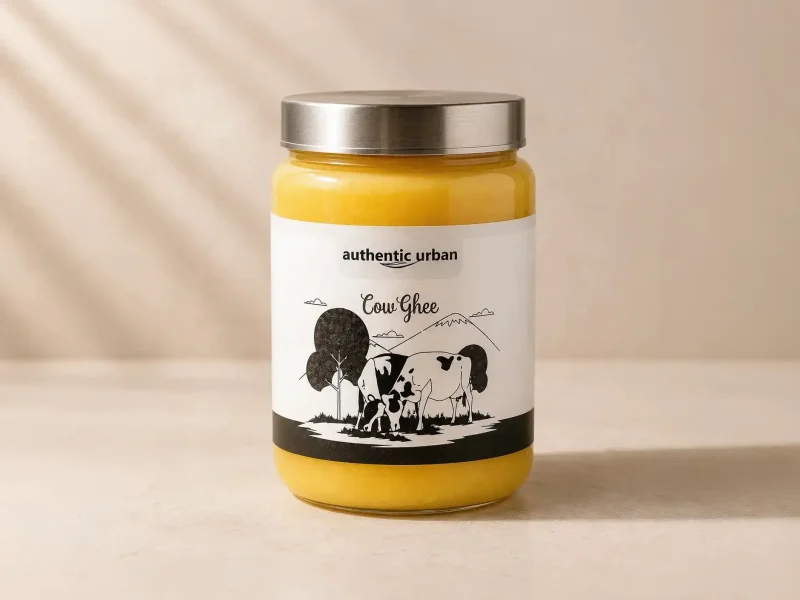 1 Litre
The ladoo batch
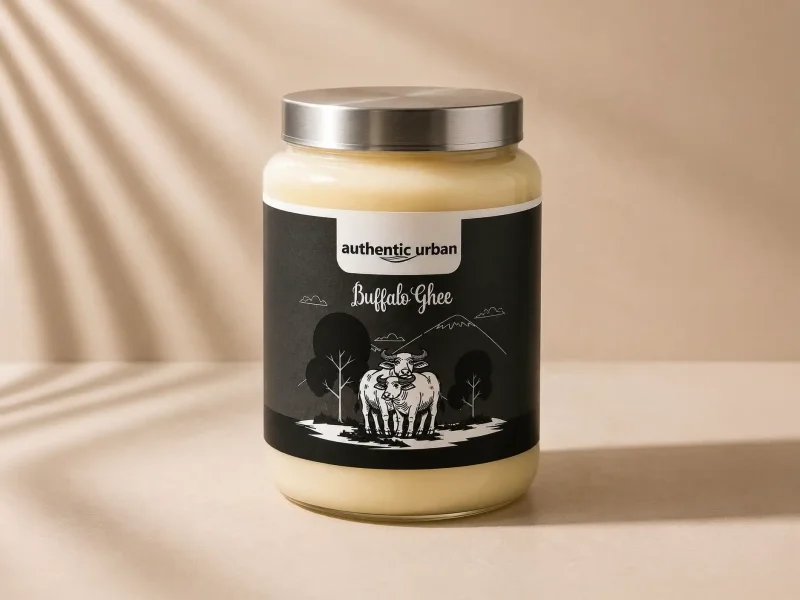 1 Litre
Each order is cooked after you place it, and the packing video is of that batch. Past order videos are on the shop.
FAQ
Can we eat gond ke ladoo in summer?
Many families keep gond ladoo for winter because acacia gond and dry fruit are treated as warming in household tradition. In summer, eat half a ladoo instead of one, and make a smaller batch, because the ghee stays soft in heat and the nuts turn stale sooner. Gond katira, the summer gum, is a different gum that swells in water for sherbets. It does not go into ladoos.
When can a new mother start eating gond ladoo?
After a normal delivery, most families give it once she is eating regular meals, and ICMR-NIN's 2024 guidelines say there is no need to avoid foods because of food taboos. After a C-section, wait until the doctor has her back on normal food. One ladoo holds about 3 teaspoons of ghee, more than the 1 to 2 teaspoon line for the day, so half a ladoo is the better start.
Is gond ladoo good for back pain or joints?
Families give gond ladoo after a birth and to elders in winter for the back and joints, and that is a household tradition, not a tested treatment. We could not find a human trial of gond ladoo for back or joint pain. Back pain after delivery, or joint pain that lasts, needs a doctor or physiotherapist. The ladoo is food: calories, fat, and a little protein from the nuts.
Can children eat gond ke ladoo?
Children over two can have half a ladoo or a smaller one of about 20 g as a winter snack, with the nuts crushed fine so they are not a choking risk. ICMR-NIN's 2024 guidelines say no added sugar for children under two, and gond ladoo is about a fifth sugar by weight, so it is not a food for babies or toddlers under two.
Can diabetics eat gond ladoo?
Only with a doctor or dietitian's go-ahead, and as part of a meal's carbohydrate, not as an extra. One ladoo from this recipe carries about 20 g of carbohydrate, including 10 g of added sugar, and 15 g of ghee. Jaggery or dates in place of sugar are still sugar. A diabetic batch with less sweetener and more nuts is safer, eaten half a ladoo at a time.
What is the difference between gond ladoo and panjiri?
They use the same family of ingredients: atta roasted in ghee, puffed gond, nuts, and sugar. Panjiri is left loose and eaten by the spoon, often with makhana and dry ginger, and is the Punjabi postpartum food. Gond ladoo has more gond, is pressed into balls while warm, and is the winter sweet of Rajasthan, Gujarat, and Maharashtra, where it is called dink ladoo.
Is gond ladoo good for weight gain?
It adds calories fast, which is why families give it to thin children and older people in winter. One ladoo is about 258 kcal, mostly from ghee, sugar, and atta, with only about 3 g of protein. For someone underweight, one ladoo a day is an easy extra, but dal, milk, curd, eggs, and an extra roti add more protein for the same calories.
About the editorial team
Authentic Urban TeamBilona ghee makers, Gir Somnath, Gujarat
We are the Parmar family in Gir Somnath, Gujarat. We have made ghee here since 2016 and sold it online since 2025. We make only Bilona ghee, test it every month, and anyone is welcome to visit and watch it being made. Our Gir cows and Jafarabadi buffalo are grass-fed village animals that graze near the Gir forest, with no hormones or milk boosters. We set their milk to curd, churn it, and cook the makkhan on a wood chulha. These articles come from that kitchen and from what customers ask us on WhatsApp. We are ghee makers, not doctors.
Sources
- Wheat flour, whole-grain (FDC ID 168893), SR Legacy, USDA FoodData Central. Checked 28 Sep 2026.
- Butter oil, anhydrous (FDC ID 173412), SR Legacy, USDA FoodData Central. Checked 28 Sep 2026.
- Sugars, powdered (FDC ID 169656), SR Legacy, USDA FoodData Central. Checked 28 Sep 2026.
- Nuts, almonds (FDC ID 170567), SR Legacy, USDA FoodData Central. Checked 28 Sep 2026.
- Nuts, cashew nuts, raw (FDC ID 170162), SR Legacy, USDA FoodData Central. Checked 28 Sep 2026.
- Nuts, coconut meat, dried (desiccated), not sweetened (FDC ID 170170), SR Legacy, USDA FoodData Central. Checked 28 Sep 2026.
- Seeds, watermelon seed kernels, dried (FDC ID 169407), SR Legacy, USDA FoodData Central. Checked 28 Sep 2026.
- Dietary Guidelines for Indians, 2024, ICMR-National Institute of Nutrition. Checked 28 Sep 2026.