Is Ghee Good for Ulcer Patients? How Much, and When
Is ghee good for ulcer patients? A little is usually fine, but ghee does not heal an ulcer or clear H. pylori. Half to one teaspoon on khichdi, dal-rice, or a soft roti at lunch suits most people on ulcer treatment. Skip it on an empty stomach, in chai, and in fried or chilli-heavy meals.
Is ghee good for ulcer patients?
Ghee is fine for most ulcer patients in small amounts, and it neither heals nor causes the ulcer. Keep it to ½ to 1 teaspoon with lunch, and 1 to 2 teaspoons across the day, the limit ICMR-NIN's 2024 dietary guidelines set for everyone. The medicines heal the ulcer. The ghee only has to stay out of the way.
A peptic ulcer is an open sore in the lining of the stomach (a gastric ulcer) or the first part of the small intestine (a duodenal ulcer). The NHS names two main causes: infection with H. pylori bacteria, and regular use of anti-inflammatory painkillers such as ibuprofen. Food is not one of them. This page is for adults with a diagnosed ulcer, or on treatment for one, who want to know if the ghee on their plate is safe. If your trouble is burning in the chest after meals, that is reflux, covered on is ghee good for acid reflux.
Can ghee heal a stomach ulcer?
No. We found no human study showing that ghee heals a stomach or duodenal ulcer, and NIDDK, the US government's digestive disease institute, says researchers have not found that diet plays an important role in causing, preventing, or treating peptic ulcers. Many pages that rank for this question promise the opposite. Here is what each claim rests on.
The claim
What is actually known
Ghee coats the stomach lining and lets the ulcer heal
No human study we found. Ghee is fat; it is digested, not left as a layer on the wound. NIDDK says researchers have not found that diet plays an important role in treating peptic ulcers.
The butyric acid in ghee repairs the ulcer
Butyrate is studied for the large intestine, where gut bacteria make it from fibre. We found no human trial of ghee healing a stomach or duodenal ulcer.
Ghee kills or protects against H. pylori
No human evidence we found. NIDDK lists the treatment as two or more antibiotics with an acid-reducing PPI, and a test at least 4 weeks after the antibiotics end.
Ghee calms pitta, so it cools an ulcer
Ayurvedic tradition (amlapitta, excess pitta or heat), not a tested treatment. A small spoon on plain food fits both views; large morning doses do not.
Ulcer patients must avoid all ghee
Not supported either. NIDDK says doctors do not recommend a special diet or avoiding specific foods to treat ulcers. The NHS only asks you to skip the foods that trigger your own symptoms, which can include fatty food.
The last row cuts both ways. Some readers are told by a relative to drop ghee completely, others to take a spoon every morning. Neither is needed. What butyrate in ghee does and does not do in the gut, with the amounts per spoon, is on butyrate in ghee.
How much ghee with an ulcer, and when?
Start with ½ teaspoon at lunch, go up to 1 teaspoon if the week stays calm, and keep the whole day to 1 to 2 teaspoons. Eat it on food, never alone, and not in the last 3 to 4 hours before bed.
When
Ghee
Why
Lunch, on khichdi, dal-rice, or a soft phulka
½ tsp, up to 1 tsp
The easiest place to start. A full stomach and hours upright.
Early dinner, 3 to 4 hours before bed
½ tsp, or none on bad days
The NHS asks ulcer patients to eat the evening meal 3 to 4 hours before bed.
Empty stomach, first thing
Skip while the ulcer hurts
A spoon of fat with nothing else is the habit ulcer readers ask about most. Leave it until your doctor says the ulcer has healed.
In chai, coffee, or bedtime milk
Skip
Coffee is on the NHS list of symptom triggers, and a bedtime drink breaks the 3 to 4 hour gap.
Fried snacks, parathas, halwa, ladoo
Small, at lunch, now and then
These carry the big fat loads the NHS names as a common trigger.
Whole day, from all dishes
1 to 2 tsp
The ICMR-NIN 2024 limit for everyone, ulcer or not.
A starting point for adults. If your doctor has given you a diet sheet, it wins.
In our home in Gir Somnath each of us eats 1 to 2 teaspoons a day, on roti, dal, and khichdi, and more only in winter sweets like adadiya pak and gond. We make ghee for a living and we still measure it. With an ulcer in the house, those winter sweets are what to keep small and eat at lunch. The morning spoon of ghee, and who should skip it, is on ghee on empty stomach. The daily limit for the rest of the family is on how much ghee per day, and you can work out your home's daily ghee and oil person by person.
Can you eat ghee with H. pylori? (H. pylori me ghee kha sakte hai?)
Yes, a small spoon with meals is fine during H. pylori treatment, but it does nothing to the infection. NIDDK says doctors treat H. pylori with a combination of medicines, most often two or more antibiotics plus a PPI (a proton pump inhibitor, which lowers stomach acid), and sometimes bismuth.
Finish the course, then the retest
Finish every tablet of the course, even once the pain eases. NIDDK notes your doctor may test you again for H. pylori at least 4 weeks after the antibiotics end, to check the infection has gone. Feeling better is not the same as a clear test. The NHS says ulcer treatment usually runs from 1 week to 2 months, depending on the cause. During those weeks, keep meals plain and small, and keep ghee to the teaspoon on lunch. If the antibiotics upset your stomach, take that to your doctor, not to the kitchen.
Which ghee meals are easy on an ulcer?
Soft, small, low-spice plates with a measured spoon of ghee are the gentlest. The NHS asks ulcer patients to avoid the foods that trigger their symptoms, which can include fatty or spicy food, coffee, and chocolate. The same ghee turns into a trigger in a chilli tadka, a late paratha dinner, or a fried snack.
The plate
For an ulcer
Why
Moong dal khichdi with ½ tsp ghee on top
Gentler
Soft, small, low in spice. The ghee is flavour, not a load.
Rice, plain dal, lauki or tinda sabzi, 1 tsp ghee on the dal
Gentler
A normal lunch with one measured spoon.
Two soft phulkas with ½ tsp ghee each, fresh curd on the side
Gentler for most
Keep the curd fresh, not sour, if it bothers you.
Chole or rajma with a chilli tadka in 2 tbsp ghee
Likely trigger
Spice and a big fat load in one bowl.
Ghee parathas with pickle for dinner
Likely trigger
Large, fatty, sour, and late.
Pakoras or samosas with strong chai
Likely trigger
Fried food and caffeine, both on the NHS trigger list.
Triggers differ from person to person. Cut the meal that burns for you, not a whole food group.
Add the ghee at the end, on the dal or the khichdi, where you taste it, and cook the sabzi in very little fat. Then half a spoon does the work of two. Our ghee khichdi recipe can be made with less chilli and the ghee spooned on top at the table. If milk or butter upsets you as well, the lactose left in ghee is covered on is ghee lactose free.
What helps an ulcer heal more than ghee?
The prescribed medicines, and stopping what caused the ulcer, do far more than any food. For most people that means finishing the H. pylori course or stopping regular painkillers, with a PPI to lower acid while the lining heals.
- Painkillers: the NHS says do not take anti-inflammatory painkillers such as ibuprofen without speaking to a doctor first. Diclofenac, common in Indian pain tablets, is one too. If you need them, NIDDK says your doctor may switch or lower them, or add a PPI.
- Smoking: NIDDK says quitting can lower your risk of ulcers and help existing ones heal. That includes bidi and hookah.
- Alcohol: the NHS advises not drinking too much while you have an ulcer.
- Meal size and timing: smaller meals, and the evening meal 3 to 4 hours before bed, per the NHS.
- Stress and weight: the NHS lists managing stress and keeping to a healthy weight among the things you can do.
NIDDK also says doctors do not recommend a special diet to treat ulcers. So a months-long bland diet of plain boiled food is not required. Eat normal home food, minus whatever brings on your pain.
Is ghee good for mouth ulcers (munh ke chhale)?
Dabbing ghee on a mouth ulcer is a household tradition in many Indian homes, but we found no study showing it heals one faster. Mouth ulcers are a different thing from stomach ulcers, and the NHS says they should clear up on their own within a week or 2.
If a little ghee on the sore makes eating feel easier, it is a clean, plain fat and unlikely to harm. What the NHS does advise is to avoid spicy, salty, or acidic food, rough crunchy food, and very hot drinks, and to use a soft toothbrush. See a dentist or doctor if a mouth ulcer lasts longer than 3 weeks, keeps coming back, bleeds, or gets more painful. Swishing ghee around the mouth is a separate practice, covered on oil pulling with ghee.
When should you stop ghee or see a doctor?
Stop the ghee for a week if even ½ teaspoon with food brings on burning, then try again at lunch only. Tell your doctor if the pain is getting worse, you feel full early, you lose weight without trying, or you keep being sick; the NHS says these need urgent advice.
Get emergency help at once if you vomit bright red blood or vomit that looks like ground coffee, pass black, sticky, very smelly stools, or have sudden severe pain in the tummy or chest. These NHS warning signs can mean a bleeding or burst ulcer. Do not wait to see if food helps.
Gallstones, pancreatitis, and other conditions where a doctor sets your fat intake are listed under who should not eat ghee. If you are on ulcer medicine, keep taking it as prescribed; ghee changes go alongside it, never instead of it.
An 8-point ghee checklist for ulcer patients
Screenshot this for the kitchen, or send it to the family member who cooks for you.
- Take the ulcer medicines exactly as prescribed. Ghee goes alongside them, never instead.
- Measure ghee with a real 5 ml teaspoon. Start with ½ teaspoon at lunch.
- Keep the whole day to 1 to 2 teaspoons, the ICMR-NIN limit.
- No ghee on an empty stomach, in chai, or in bedtime milk while the ulcer hurts.
- Eat smaller meals, and finish dinner 3 to 4 hours before bed.
- No painkillers like ibuprofen or diclofenac without asking your doctor.
- Write down any meal that brings on the burning, and cut that meal, not every spoon.
- Vomiting blood, black sticky stools, or sudden severe pain: emergency care now.
Which ghee for an ulcer-friendly kitchen?
No ghee is better for an ulcer than another; the spoon size and the plate are what count. What you want is ghee that tastes good enough that half a teaspoon is enough. Well-made ghee smells of toasted milk when warmed and often sets grainy when cool. A batch cooked too hard turns dark and bitter; we keep ours at home and never pack it. Varsha tastes every batch before it goes into a jar. How to check any jar is on how to identify pure ghee, and our ranking of the cow ghee on sale is best cow ghee in India.
We make and sell ghee, so weigh this with that in mind. For the daily half spoon we would pick our own A2 Gir cow ghee: grass-fed Gir milk set to curd overnight, churned, and cooked in a matki on a wood chulha, made after you order, with a video of your jar sent on WhatsApp. At ₹2,399 a litre, a 5 ml teaspoon costs about ₹12. Our Jafarabadi buffalo ghee is the richer jar for halwa and ladoo, best kept small and at lunch while an ulcer heals. We test every month against the FSSAI limits; the steps are on how we make ghee.
The ½ teaspoon on lunch khichdi
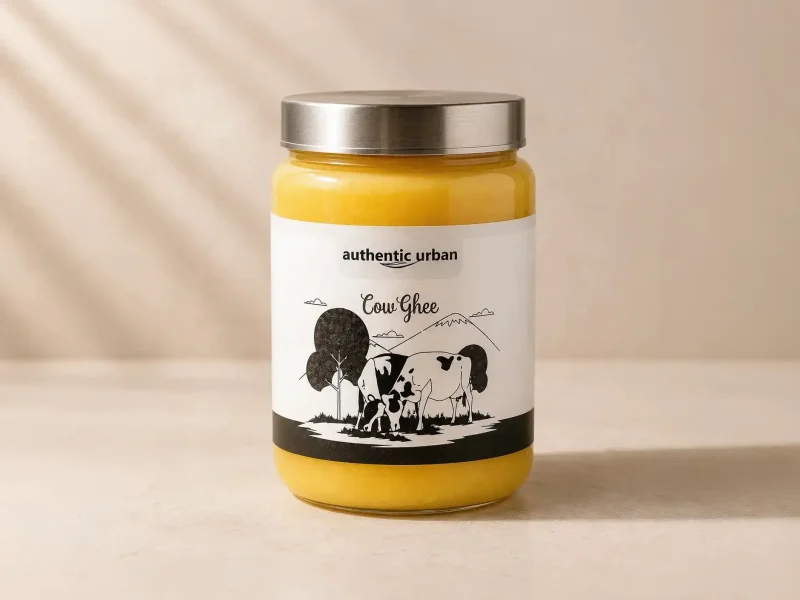 1 Litre
Festival halwa, small and early
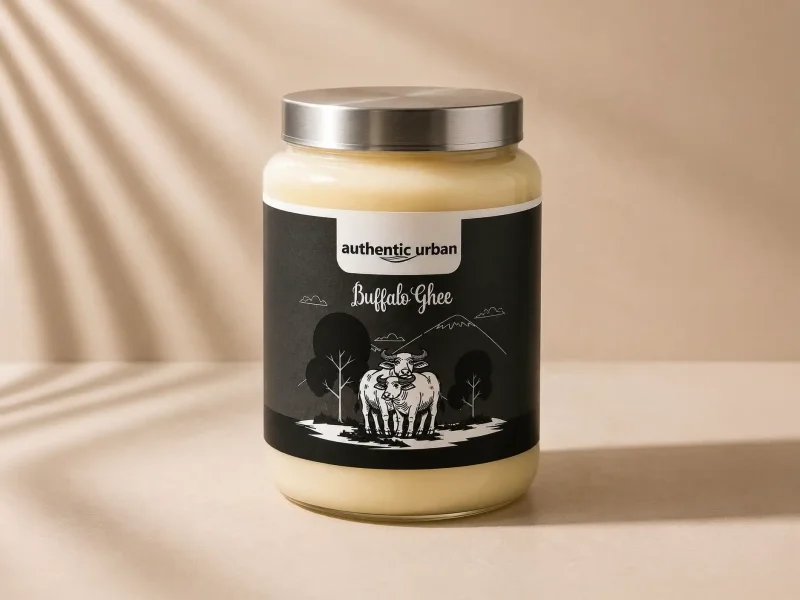 1 Litre
Each order is cooked after you place it, and the packing video is of that batch. Past order videos are on the shop.
FAQ
Ulcer me ghee kha sakte hai?
Haan, thoda sa. Most people with a stomach or duodenal ulcer can eat ½ to 1 teaspoon of ghee with lunch, on khichdi, dal-rice, or a soft roti, while they take their ulcer medicines. Avoid it khali pet (on an empty stomach), in chai, and late at night. Keep the day to 1 to 2 teaspoons. If even that spoon brings on jalan in the stomach, stop and tell your doctor.
Is ghee or butter better for an ulcer?
Neither heals an ulcer, and no study we found compares them for it. Ghee is almost pure milk fat with the milk solids cooked out, so it has less lactose and milk protein than butter. That helps only if dairy already upsets you. For the ulcer itself, the amount on the plate matters more than which fat it is. Keep either one to a measured teaspoon, with food.
Is milk with ghee good for a stomach ulcer?
Not as a treatment. Neither the NHS nor NIDDK lists milk or ghee milk among ulcer treatments, and NIDDK says diet does not play an important role in treating ulcers. Milk may feel soothing for a short while. A glass with ghee at bedtime also breaks the NHS advice to eat 3 to 4 hours before bed. If you enjoy it, have it in the early evening with ½ teaspoon.
Is cow ghee or buffalo ghee better for ulcer patients?
Neither is better for an ulcer in any study we found. Both are almost pure milk fat, so the spoon size matters more than the animal. Cow ghee is lighter in taste, which makes it easier to stop at half a teaspoon on dal or khichdi. Buffalo ghee is richer and usually goes into halwa and parathas, the heavier dishes to keep small and early while an ulcer is healing.
Is ghee good for gastritis?
A small spoon with meals is usually fine with gastritis, but ghee does not treat it. Gastritis is inflammation of the stomach lining, a different diagnosis from an ulcer, but the same kitchen rules suit it: ½ to 1 teaspoon at lunch, nothing on an empty stomach, no fried or chilli-heavy plates. If the burning lasts more than a few weeks, get it checked.
Can ghee protect my stomach from painkillers?
No. Regular anti-inflammatory painkillers such as ibuprofen are one of the two main causes of stomach ulcers, per the NHS, and a spoon of ghee with the tablet does not change that. NIDDK says doctors may stop the painkiller, switch or lower it, or add an acid-reducing PPI if you must keep taking it. Ask your doctor before any regular painkiller if you have had an ulcer.
About the editorial team
Authentic Urban TeamBilona ghee makers, Gir Somnath, Gujarat
We are the Parmar family in Gir Somnath, Gujarat. We have made ghee here since 2016 and sold it online since 2025. We make only Bilona ghee, test it every month, and anyone is welcome to visit and watch it being made. Our Gir cows and Jafarabadi buffalo are grass-fed village animals that graze near the Gir forest, with no hormones or milk boosters. We set their milk to curd, churn it, and cook the makkhan on a wood chulha. These articles come from that kitchen and from what customers ask us on WhatsApp. We are ghee makers, not doctors.
Sources
- Eating, Diet, & Nutrition for Peptic Ulcers (Stomach Ulcers), National Institute of Diabetes and Digestive and Kidney Diseases (NIDDK). Checked 27 Sep 2026.
- Treatment for Peptic Ulcers (Stomach Ulcers), National Institute of Diabetes and Digestive and Kidney Diseases (NIDDK). Checked 27 Sep 2026.
- Stomach ulcer, NHS. Checked 27 Sep 2026.
- Mouth ulcers, NHS. Checked 27 Sep 2026.
- Dietary Guidelines for Indians, 2024 (limit ghee or butter to 1 to 2 teaspoons a day, PDF p. 71), ICMR-National Institute of Nutrition. Checked 27 Sep 2026.