Oil Pulling with Ghee: How to Do It, and Does It Work?
Oil pulling with ghee means swishing 1 teaspoon of warm, melted ghee around your mouth for 5 to 15 minutes on waking, then spitting it into the bin and brushing. It is safe for most adults and may help the gums a little. No trial has tested ghee itself, and the American Dental Association does not recommend oil pulling in place of brushing and flossing.
Can you do oil pulling with ghee?
Yes. Ghee works for oil pulling the same way coconut or sesame oil does: 1 teaspoon, melted, swished gently for 5 to 15 minutes, then spat out. Expect a cleaner-feeling mouth and perhaps calmer gums over a few weeks. Do not expect whiter teeth, fewer cavities, or a detox. Keep brushing twice a day and flossing.
This page is for adults who have seen oil pulling in a reel or heard of gandusha from an elder and want to try it with the ghee already in the kitchen. We make ghee in Gir Somnath, Gujarat, and at home our ghee is for eating, on roti, dal, and khichdi. Oil pulling is a household tradition we describe here with its limits, not a routine we are telling you to start. For the wider picture of ghee in Ayurveda, see our Ayurvedic guide to ghee.
How to do oil pulling with ghee, step by step
Sit up, melt a teaspoon of ghee, swish it slowly for 5 minutes with your lips closed, spit it into the bin, rinse, and brush.
1. Do it on waking, sitting up
Before tea, water, or breakfast. Sit or stand upright. Never lying down or reclined, so nothing runs to the back of the throat.
2. Melt 1 teaspoon of ghee
About 5 ml. If the jar has set, stand it in a bowl of warm water for a minute and take out a teaspoon with a dry spoon. Body warmth, never hot.
3. Swish gently for 5 minutes
Push and pull the ghee between the teeth with the cheeks and tongue, lips closed. Slow and easy. Do not gargle and do not tip your head back.
4. Spit it into the dustbin
Into a tissue or the bin, not the sink. Ghee sets as it cools and builds up in drains.
5. Rinse with warm water
Swish and spit plain warm water once or twice to clear the film.
6. Brush and floss as usual
Oil pulling comes before your normal routine, never instead of it.
Melting the ghee: winter and summer
The same jar of ghee behaves differently through the year, and that decides how you start. In summer the milk we get is lighter, the curd sours faster, and the ghee stays liquid in the jar, so you can pour a teaspoon straight out. In winter the milk is richer and the ghee cools to a fine grain. A teaspoon of set ghee melts in the mouth in a minute or so, but it is easier to swish if you stand the jar in a bowl of warm water first. Never heat it on the flame for this: ghee straight off the flame is hotter than boiling dal and can scald the mouth. The grain itself is normal, and it is the question we are asked most on WhatsApp; we explain it on why ghee is grainy.
Smell the ghee before it goes in your mouth for 10 minutes. Good ghee smells of toasted milk. A batch cooked too short stays cloudy, holds moisture, and turns sour fast, and one cooked too long is dark and smells burnt. We never pack either, and neither is pleasant to hold in the mouth. How to tell a jar has turned is on does ghee go bad. Take the teaspoon out with a dry spoon every time so no water gets into the jar.
Does oil pulling with ghee work?
It may help the gums a little, and that is all the evidence supports. We could not find a single trial that used ghee; every study below used sesame, coconut, or other oils, so treat ghee as the same idea, untested.
The largest review we found, published in the International Journal of Dental Hygiene in 2024, pooled 25 trials with 1,184 people. Oil pulling improved gum scores compared with other mouthwashes that were not chlorhexidine, but chlorhexidine (the prescription mouthwash dentists use) cut plaque more than oil pulling did. The authors rated the overall quality of the evidence as very low. A 2020 review in Heliyon looked at coconut oil only: 4 small trials with 182 people, each lasting 7 to 14 days. Plaque went down, but there was no difference from control groups in Streptococcus mutans, the main germ behind cavities.
The American Dental Association does not recommend oil pulling, and says there are no reliable studies showing it reduces cavities, whitens teeth, or improves oral health. Here is every popular claim against what we can say.
Claim
Verdict
What the evidence says
Healthier gums, less bleeding
Possible
The 2024 review found a probable benefit for gum health compared with other non-chlorhexidine mouthwashes, from very low quality evidence. None of the trials used ghee.
Less plaque
Small, if any
Coconut oil trials showed less plaque over 7 to 14 days. Chlorhexidine, the dentist's mouthwash, beat oil pulling on plaque in the 2024 review.
Fresher breath in the morning
For a while
Swishing anything moves food bits and coats the tongue less. Bad breath that stays all day needs a dentist, and sometimes a doctor.
Kills cavity germs (S. mutans)
Not shown
The 2020 coconut oil review found no difference from control groups in this cavity germ.
Heals or prevents cavities
No
The ADA says no reliable study shows oil pulling reduces cavities. A hole in a tooth needs a filling.
Whitens teeth
No
The ADA says the same for whitening. Ghee is yellow; it does not bleach anything.
Pulls toxins out of the body
No
The milky white spit is ghee mixed with saliva and air. It is not toxins leaving the blood.
One more thing the studies share: they are small and short, the coconut oil trials all came from Asia (mostly India), and the 2020 review rated their risk of bias as high. If your gums feel better after two weeks, part of that may be simply paying more attention to your mouth each morning. That is still a fine result, as long as it does not replace the brush.
Ghee, coconut oil, or sesame oil for oil pulling?
Coconut oil is the most studied, sesame oil is the one the old texts name, and ghee is the one many Indian homes already have. For your mouth, the choice matters less than doing it gently and still brushing.
Oil
Studied for pulling?
In the mouth
Pick it for
Ghee
No trial of ghee for oil pulling found
Soft and rich; sets in winter, so melt it first
A dry mouth or sore gums, if you already keep ghee
Coconut oil
Several small trials, mostly from India
Light; also sets below room warmth in winter
The most studied choice today
Sesame (til) oil
Trials, and the oil the classical texts name
Thin and liquid all year
Winter, when you do not want to melt anything
People who pick ghee usually do so because the mouth feels dry, or the gums feel sore with a sharper oil, or they simply prefer the taste of ghee to raw coconut. That is a matter of comfort, not a proven advantage. If you want the evidence behind the choice, coconut oil has more. Which of the two to cook and eat with is a separate question, answered on ghee vs coconut oil. Whatever you use, it should be plain: no flavoured ghee, no perfumed oil, and no medicated herbal ghritam unless a qualified Ayurveda doctor prescribed it for the mouth.
How long and how often should you oil pull with ghee?
Start with 1 teaspoon for 5 minutes, once a day in the morning. Build up to 10 or 15 minutes only if your jaw and stomach are fine with it, and judge it after two weeks.
Many guides say 15 to 20 minutes. Most people's jaws ache long before that on the first day, and a tired swish turns into gargling, which is how oil reaches the throat. More ghee does not help either: a tablespoon fills the mouth and is harder to control than a teaspoon. Here is a two-week trial you can save.
When
How much
What to watch
Days 1 to 3
1 tsp, 5 minutes
Gag, nausea, or jaw ache: stop at 3 minutes and stay there.
Days 4 to 7
1 tsp, up to 10 minutes
Any cough while swishing: you are breathing some in. Stop.
Days 8 to 14
1 tsp, 10 to 15 minutes if comfortable
Gums bleeding less when you brush? Morning mouth fresher?
Day 15
Decide
No change: stop, and book a dental check if gums still bleed. Feels good: carry on, and keep brushing and flossing.
If you already take a spoon of ghee with warm water in the morning, pull first, spit, rinse, and brush, and then have your spoon. The two are different habits; what the fasted spoon does and does not do is on ghee on an empty stomach.
What does Ayurveda say about gandusha and kavala?
Ayurveda texts describe two ways of holding a liquid in the mouth as part of the daily routine (dinacharya): gandusha, where the mouth is filled and the liquid held still, and kavala, where a smaller amount is swished around. Oil pulling as sold on social media is closer to kavala.
Sesame oil is the oil most linked with the practice, and ghee and other liquids are also described. Households that choose ghee usually do so for a dry or sore mouth. The texts link the practice with strong teeth and gums, a clear voice, and a good sense of taste. That is tradition, written long before anyone counted plaque, and it is worth respecting as the reason families do this. It is not a trial, and the modern trials, as above, did not use ghee. The same logic applies to ghee in the nose, which carries a larger risk and is covered on ghee in the nose (nasya).
Is oil pulling with ghee safe? Side effects
For most adults, yes. The common side effects are mild: an aching jaw, a feeling of nausea from the texture, and a greasy film in the mouth. The rare serious one is breathing oil into the lungs.
In 2015, BMC Pulmonary Medicine reported two people with lipoid pneumonia (a slow lung inflammation caused by fat in the lungs) after months of sesame oil pulling. One, a 38-year-old woman, had washed her mouth with sesame oil every morning for 6 months and came in short of breath; she improved once she stopped. The authors call it rare. The 2020 Heliyon review also notes such cases in people prone to breathing in what is in their mouth. That is why the steps above say sit upright, swish gently, never gargle, and spit at the first cough.
Stop and see a doctor if a dry cough, breathlessness, or fevers start while you are oil pulling regularly, and tell them about the habit and for how long. It changes what they look for.
Who should not do oil pulling with ghee
We are ghee makers, not dentists or doctors. Skip it, or ask first where it says so, if any of these apply:
- Young children, or anyone who cannot reliably swish and spit without swallowing or choking.
- Trouble swallowing, after a stroke, or a frail elderly person: oil that slips back is harder for them to cough out.
- Asthma, a chronic cough, or any lung disease: ask your doctor first.
- A strong gag reflex, or morning sickness in pregnancy: the texture can bring on vomiting. Ask your doctor if you are pregnant.
- Jaw joint pain (TMJ) or a clicking jaw: long swishing makes it worse. Keep it to a minute or two, or skip it.
- A tooth abscess, swelling in the face, fever, or pain: this needs a dentist now, not a rinse.
- A milk allergy: ghee can hold a trace of milk protein, as explained on milk protein in ghee.
What helps teeth and gums more than oil pulling?
Brushing and flossing. The ADA's advice is to brush twice a day for two minutes with a fluoride toothpaste, floss once a day, and avoid tobacco. Oil pulling is at best an extra before that routine.
Gums that bleed when you brush are a common early sign of gum disease, and a dental cleaning (scaling) does more for them in one visit than weeks of swishing. See a dentist if bleeding carries on beyond two weeks of careful brushing, or for loose teeth, receding gums, pain on biting, or bad breath that does not go by midday. For dry, cracked lips, a thin film of ghee on the lips at night is a separate, simpler use, covered on ghee for lips.
Which ghee for oil pulling and the kitchen?
Buy one plain jar that does both jobs: nothing added, a smell of toasted milk when warmed, and grain when cool, which is normal for slow curd-churned ghee. Five quick checks for a pure jar are on how to identify pure ghee, how curd Bilona (curd churned by hand) differs from cream ghee is on the Bilona method, and our ranking of the cow ghee on sale is best cow ghee in India.
We make and sell ghee, so weigh this with that in mind. For a morning swish and your daily dal we would pick our own A2 Gir cow ghee: milk from grass-fed Gir cows, set to curd overnight, churned, and cooked in a matki on a wood chulha, made after you order, with a video of your jar sent on WhatsApp. It melts easily, which suits the swish. For paratha and sweets, our Jafarabadi buffalo ghee is the richer jar. We test every month against the FSSAI limits; the steps are on how we make ghee.
The morning swish and the daily teaspoon
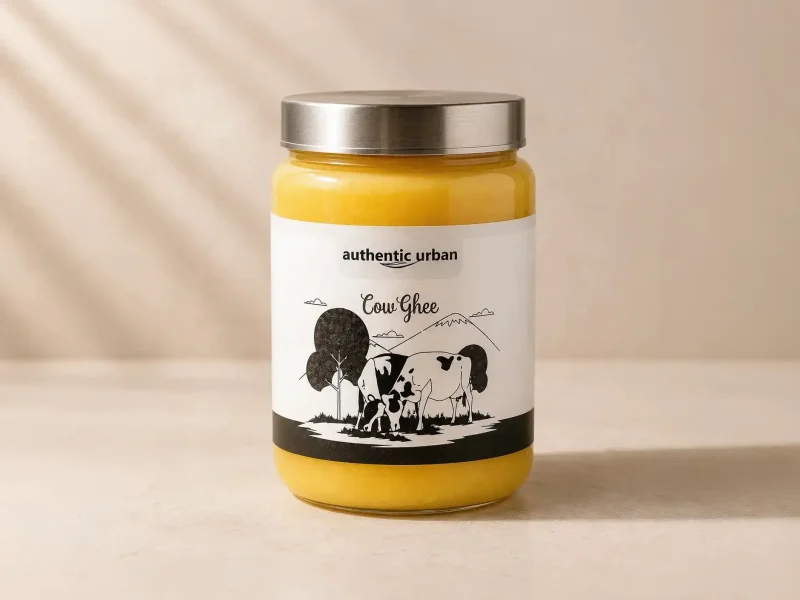 1 Litre
Paratha, halwa, and ladoo
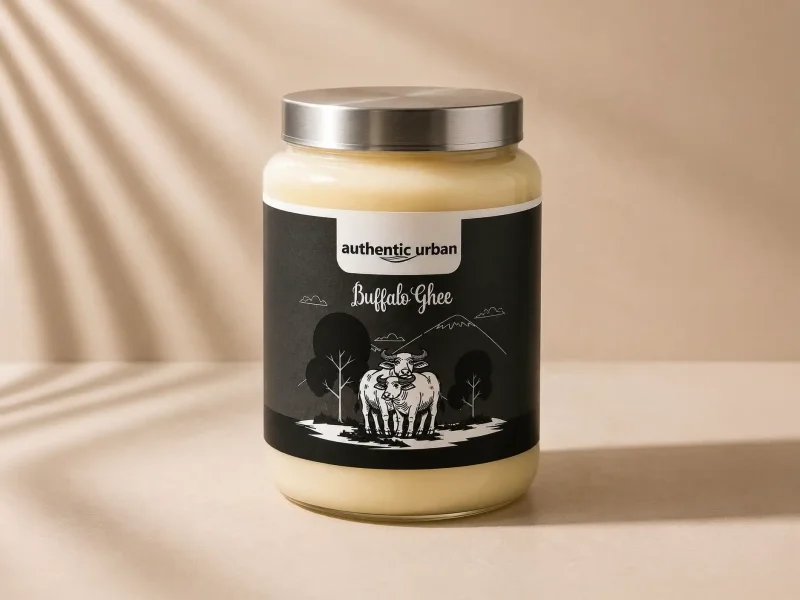 1 Litre
Each order is cooked after you place it, and the packing video is of that batch. Past order videos are on the shop.
FAQ
Can I do oil pulling with ghee at night?
You can, but morning is the better time. Ayurveda puts gandusha in the morning routine, and on waking the mouth has had a whole night of dry, stale saliva. If night suits you, do it sitting up after dinner and at least an hour before bed, then brush. Never swish and then lie down straight away, because any ghee left at the back of the mouth can run towards the throat.
What if I swallow some ghee while oil pulling?
A small slip is not a worry. Ghee is food, and the amount is less than you would put on one roti. The reason to spit is that the ghee has picked up saliva, food bits, and mouth germs, so it is better in the bin than in your stomach. What matters more is not breathing it in: if you start to cough while swishing, spit at once and stop for the day.
Cow ghee or buffalo ghee for oil pulling?
Households that do gandusha with ghee usually pick cow ghee. It melts at a lower warmth and stays liquid in the mouth for longer, while buffalo ghee is thicker and sets firmer, so it can start to feel waxy by the end of a long swish. Either works for a few minutes. More important is a plain, fresh jar with nothing added that smells of toasted milk.
Can I add turmeric, clove, or salt to the ghee?
Keep it plain for daily use. Turmeric stains the tongue, sink, and any white fillings or aligners yellow. Clove oil is strong and can burn the gums and inside of the cheeks if the dose is off. Salt does not dissolve in ghee, so it just sits in grains. If you want a warm salt rinse for a sore mouth, do that separately with water after spitting out the ghee.
Is oil pulling with ghee safe with braces, fillings, or implants?
Swishing ghee does not harm fillings, crowns, or implants, and a few minutes of gentle swishing is fine with braces. It will not clean under brackets or wires, so you still need the brushes and floss your orthodontist gave you. After gum surgery, an extraction, or implant placement, ask your dentist before any vigorous swishing; pressure in the mouth can disturb a healing wound.
Does oil pulling with ghee help mouth ulcers?
A thin film of ghee can make a sore ulcer feel less raw for a while, and many households dab ghee on it. There is no trial showing that swishing ghee makes ulcers heal faster. An ulcer that does not heal, keeps coming back, bleeds, grows, or has no clear cause needs a dentist or doctor to look at it, and so does any ulcer in a smoker or tobacco chewer.
About the editorial team
Authentic Urban TeamBilona ghee makers, Gir Somnath, Gujarat
We are the Parmar family in Gir Somnath, Gujarat. We have made ghee here since 2016 and sold it online since 2025. We make only Bilona ghee, test it every month, and anyone is welcome to visit and watch it being made. Our Gir cows and Jafarabadi buffalo are grass-fed village animals that graze near the Gir forest, with no hormones or milk boosters. We set their milk to curd, churn it, and cook the makkhan on a wood chulha. These articles come from that kitchen and from what customers ask us on WhatsApp. We are ghee makers, not doctors.
Sources
- The effect of oil pulling in comparison with chlorhexidine and other mouthwash interventions in promoting oral health: a systematic review and meta-analysis (Jong, Ooi, Teoh, 2024; 22(1):78-94), International Journal of Dental Hygiene. Checked 27 Sep 2026.
- The effect of oil pulling with coconut oil to improve dental hygiene and oral health: a systematic review (Woolley et al., 2020), Heliyon. Checked 27 Sep 2026.
- Exogenous lipoid pneumonia caused by repeated sesame oil pulling: a report of two cases (Kuroyama et al., 2015), BMC Pulmonary Medicine. Checked 27 Sep 2026.
- Oil Pulling, American Dental Association (MouthHealthy). Checked 27 Sep 2026.