Ghee for Stretch Marks: Does It Work, and How to Use It
Ghee for stretch marks eases the dry, tight, itchy skin of a growing belly, but no study shows it prevents marks or fades them. Trials of olive oil and cocoa butter, the closest things tested, found no clear effect. If you like the ritual, use half a teaspoon, massaged in after a bath, twice a day, after a patch test.
Does ghee work for stretch marks?
Not in the way most pages promise. Ghee softens skin that feels tight and itchy as it stretches, and that comfort is real. Whether it prevents or fades stretch marks has never been tested, and the oils that have been tested in pregnancy did not prevent them. Genes, hormones, and how fast the skin stretches matter more than any fat you rub on.
Here is what the tests do show. A 2022 Cochrane review of six trials in 800 pregnant women looked at olive oil, cocoa butter, and three branded creams with vitamin E or hyaluronic acid, and found no high-quality evidence that any of them prevents stretch marks. The American Academy of Dermatology (AAD) says that in studies, none of the marks faded when people massaged almond oil, cocoa butter, olive oil, or vitamin E into them. Ghee is a fat like olive oil and cocoa butter, and there is no reason to expect it to do what they could not.
Stretch marks are common and harmless. The NHS says around 8 out of 10 pregnant women get them, and that they usually fade into paler scars over time. So the fair aim for a belly massage is less itch, softer skin, and a few calm minutes a day. Pages that promise a 30 to 50% fade in weeks do not say where that number comes from. For eating ghee while pregnant, the daily amount by trimester is on ghee during pregnancy.
How to apply ghee on stretch marks
After a patch test, melt half a teaspoon of ghee between your palms and massage it into the belly in slow circles for 2 to 3 minutes, after your morning and night bath. The AAD says taking time to massage a product in may help it work better.
1. Patch test first
A few drops on the inner arm, twice a day for 2 days. Redness, itch, or small bumps mean ghee is not for your skin.
2. After a warm bath
Pat the skin dry, leaving it slightly damp. Warm, not hot, water: hot baths dry stretching skin further.
3. Melt it in your palms
Half a teaspoon for the belly. Rub it between your hands until clear. Never heat it on the stove.
4. Massage in slow circles
Two to three minutes over the belly, then the sides, hips, thighs, and breasts if they feel tight. Light pressure on a pregnant belly.
5. Let it sink in
Five minutes before clothes go on. Old cotton for the first days, as ghee marks fabric.
6. Morning and night
Twice a day, every day. The AAD notes that results from any skin product take weeks to show.
7. Judge it at 8 weeks
Less itch and softer skin is what to expect. Stop at once if a rash, pimples, or itching that keeps you awake appears.
Warm it in your hands, never on the flame. In our kitchen in Gir Somnath, ghee is only ready once every drop of water in the makkhan has boiled away, so ghee straight off the stove is far hotter than boiling dal, and a splash burns worse. On a belly, your palms are warm enough. If you need it runnier, stand a small steel bowl in warm water and test a drop on your wrist. If ghee has already burned skin, what to do is on ghee for burns.
Use a separate small bowl. Take a week's worth out of the kitchen jar with a dry spoon, so hands that have touched skin never go back into the ghee you cook with. How to keep that jar fresh for months is on how to store ghee.
How much ghee, and what it costs
Half a teaspoon, about 2.5 ml, covers the belly. Add a little more for hips, thighs, and breasts. If your skin still feels greasy after ten minutes, use less. At two massages a day, a 250 ml bowl lasts about seven weeks, close to the eight weeks it takes to judge the routine. At our 1 litre price of ₹2,399 for A2 Gir cow ghee, that is about ₹12 a day. Any clean, fresh ghee from your kitchen does the same job on skin.
How the ghee behaves changes with the season. In winter our milk is richer and the ghee cools into fine grains that take a minute longer to melt in the palms; that grain is normal, as why ghee is grainy explains. In summer the same jar stays liquid, so tip out less than you think you need. A full-body ghee massage, with the amount for each part of the body, is on ghee massage (abhyanga).
Is ghee for stretch marks safe during pregnancy?
For most women, yes, as a thin layer with light pressure, once a patch test shows no reaction. Tell your midwife or doctor you are doing it, the way you would mention any new product. Plain ghee has no perfume and no retinol, which is what matters most when choosing a belly product in pregnancy.
Check any cream you buy for retinoids. The NHS says not to use retinoid creams if you are pregnant, as they may harm your baby, and the AAD says to check with your doctor before treating stretch marks while pregnant or breastfeeding. Look for tretinoin, retinol, or retinyl on the label. Plain ghee avoids that question, and so does a plain, unperfumed moisturiser.
Mild itch is normal; some itch is not. The NHS says itching in pregnancy can come from hormones and the skin stretching, and suggests an unperfumed moisturiser, loose cotton clothes, and warm rather than hot baths. Ghee can be that moisturiser. But itching that keeps you awake at night, or itchy palms and soles, can be intrahepatic cholestasis of pregnancy (ICP), a liver condition that needs treatment. The NHS says to call your maternity unit if you have those signs. No oil or ghee is the answer to that itch.
Keep the massage gentle. Slow, light circles over a pregnant belly, with no kneading or deep pressure, and stop if you feel tightening or pain. The NHS also says most women gain about 10 to 12.5 kg in pregnancy and should not try to lose weight while pregnant. Steady weight gain helps the skin more than any oil, so if you are worried about your weight, that is a talk for your midwife, not a reason to eat less. Which jar to eat from while pregnant is on which ghee during pregnancy.
Can ghee fade stretch marks after delivery?
It can make the skin feel softer and ease the itch of new marks, but it will not make old ones disappear. The AAD says stretch marks are a type of scar and are permanent, although they fade with time, and that treatment works best on early marks and has little effect on mature ones.
What the mark looks like
What ghee can do
What does more
New, pink, red, purple, or dark brown, sometimes raised and itchy
Eases the itch and dryness. The AAD says treatment works best on early marks, but oils did not fade them in studies.
Time, and after pregnancy and breastfeeding, a dermatologist if they bother you
Old, pale, silver or white, sunk slightly into the skin
Little or nothing. These are mature scars.
Laser, microneedling, or peels at a dermatologist. None removes them fully.
Wide, purple marks with fat building up in unusual places or changes to your face
Not the question to ask
A doctor. The NHS names these signs for Cushing's syndrome.
Marks after using a steroid cream for weeks
Not the fix
Tell the doctor who prescribed the cream
From the AAD stretch marks page and the NHS stretch marks page, checked 28 September 2026.
After a C-section, stay off the wound. Massage the skin above and around the belly only, and leave the scar and the stitches alone until your doctor says the wound has fully healed. After that, what ghee can and cannot do for the scar line itself is on ghee for scars. When a new mother can start eating ghee again, and how much, is on ghee after delivery.
While breastfeeding, keep it off the nipple. Wipe away any ghee near the breast before a feed. Eating ghee while nursing is a separate question, covered on ghee for breastfeeding.
Is ghee better than coconut oil or a stretch mark cream?
It is about as good as any plain oil for softening skin, and no cream has shown it does better at preventing marks. The difference is mostly price, smell, and feel.
Product
What the tests found
What it is good for
Watch for
Ghee
No trial of ghee on stretch marks
Softens dry, tight, itchy skin; one plain ingredient, no perfume
Greasy; marks clothes; can cause pimples on some skin
Olive oil
Tested in trials: did not prevent marks (Cochrane 2022)
Same softening job as ghee
Greasy
Cocoa butter
Tested in trials: did not prevent marks (Cochrane 2022)
Solid balm, easy to carry
Often sold with perfume; read the label
Coconut or almond oil
Almond oil did not fade marks in studies (AAD)
Lighter than ghee, spreads further
Skip almond oil with a nut allergy
Stretch mark creams (vitamin E, hyaluronic acid)
No high-quality evidence they prevent marks (Cochrane 2022)
Some women like the feel
Price, perfume, and any retinol
Retinoid creams (tretinoin, retinol)
Some effect on early marks (AAD)
After pregnancy and breastfeeding, if a doctor agrees
Not in pregnancy (NHS); ask a doctor while breastfeeding
From the 2022 Cochrane review, the AAD, and the NHS, checked 28 September 2026.
If you already cook with ghee, it is the cheapest option in the house and has one ingredient, so a reaction is easy to trace. If you want something lighter for hot months, coconut oil does the same softening job; how the two fats compare in the kitchen is on ghee vs coconut oil. Shata dhauta ghrita, ghee washed with water many times until it turns into a light cream, spreads more easily than plain ghee; what the washing changes and how to make it is on shata dhauta ghrita. Ghee-based stretch mark creams sold in shops add other ingredients and perfume; read the full label before using one in pregnancy.
What helps stretch marks more than ghee?
Steady weight change, time, and, for marks that still bother you after pregnancy and breastfeeding, a dermatologist. The NHS says the best way to lower your chance of stretch marks is to keep a healthy weight, and that marks usually start darker and fade over time.
- Slow, steady gain in pregnancy. Follow your midwife's weight plan. Crash dieting after delivery also stretches and shrinks skin fast.
- Waiting. Most marks fade to paler lines on their own over time. Take a photo now and one in six months before spending on a clinic.
- A dermatologist, later. The AAD lists chemical peels, laser therapy, microdermabrasion, radiofrequency, and ultrasound, and says none of these gets rid of stretch marks completely. The NHS notes these treatments are paid for, not free.
- Food for skin in general. Protein, vitamin C, and enough water matter for skin more than extra fat; what ghee does and does not give skin from the plate is on ghee for collagen and skin elasticity.
When should you stop, or see a doctor?
Stop the ghee if it causes a rash, pimples, or redness. See a doctor or call your maternity unit for itching without a rash that keeps you awake, itchy palms and soles in pregnancy, or stretch marks that come with other body changes.
- Pregnant and itching badly, especially on the hands and feet or at night: call your maternity unit. The NHS names these as signs of ICP.
- A rash, blisters, or raised red patches on or around the marks: stop all products and see your doctor. It may be a skin condition of pregnancy or a reaction.
- Small bumps or pimples where you massage: stop the ghee for a week and use less, or switch to a light, unperfumed lotion.
- Wide purple marks with fat building up in unusual places, or changes to your face: the NHS says to see a GP, as these can be signs of Cushing's syndrome.
- Marks that upset you: a dermatologist can tell you what might help your skin, and it is fine to ask.
We make ghee; we are not doctors. Your midwife, obstetrician, or dermatologist decides what goes on your skin in pregnancy.
A stretch mark care checklist
Ten steps for the belly massage weeks, in order. Screenshot the list if it helps.
- Patch test on the inner arm for 2 days before the first belly massage.
- Pregnant: tell your midwife or doctor you are oiling the belly, and ask before any new cream.
- Warm bath, pat dry, then half a teaspoon of ghee melted in your palms.
- Slow circles for 2 to 3 minutes, light pressure on a pregnant belly.
- Twice a day, every day, for 8 weeks before you judge it.
- Keep off C-section stitches and any broken skin until your doctor says the wound has healed.
- Loose cotton clothes and no perfumed soap on itchy skin.
- Itching on the palms and soles, or itching that keeps you awake: call your maternity unit.
- Rash, pimples, or redness: stop the ghee.
- Old white marks you want gone: a dermatologist, after breastfeeding ends.
Which ghee for the belly and the plate?
On skin, freshness matters more than the label: plain ghee with nothing added, that melts clear and smells of toasted milk, not sour or like old paint. A batch taken off our chulha too early stays cloudy, keeps water, and spoils fast, which is why it never goes in a jar. Five ways to check yours at home are on how to identify pure ghee.
We make and sell ghee, so weigh this with that in mind. For the kitchen jar that also fills the small massage bowl, we would pick our own A2 Gir cow ghee: milk from grass-fed Gir cows, set to curd overnight, churned, and cooked in a matki on a wood chulha, made after you order, with a video of your jar sent on WhatsApp. Our Jafarabadi buffalo ghee sets firmer, which some people prefer as a balm for hips and thighs. We test every month against the FSSAI limits; the steps are on how we make ghee. Our ranking of the cow ghee on sale is on best cow ghee in India.
The massage bowl and the daily teaspoon
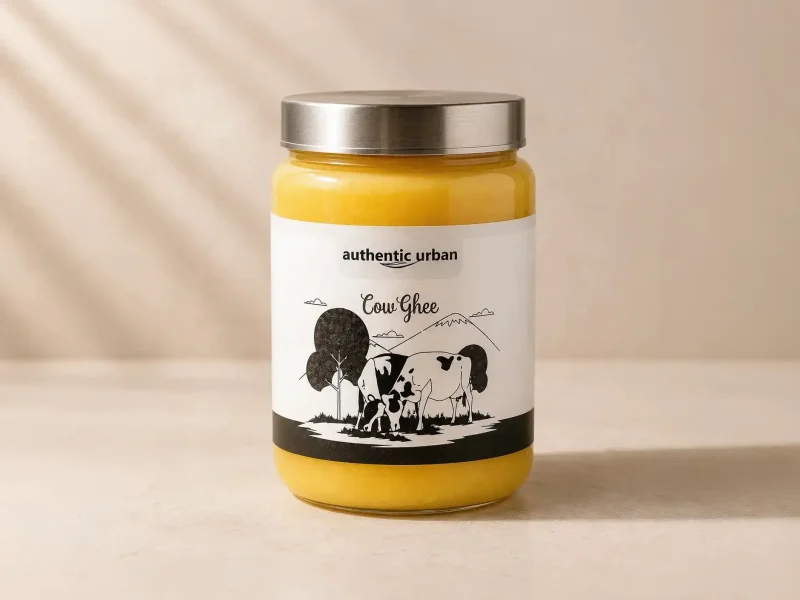 1 Litre
A firmer balm, paratha, and halwa
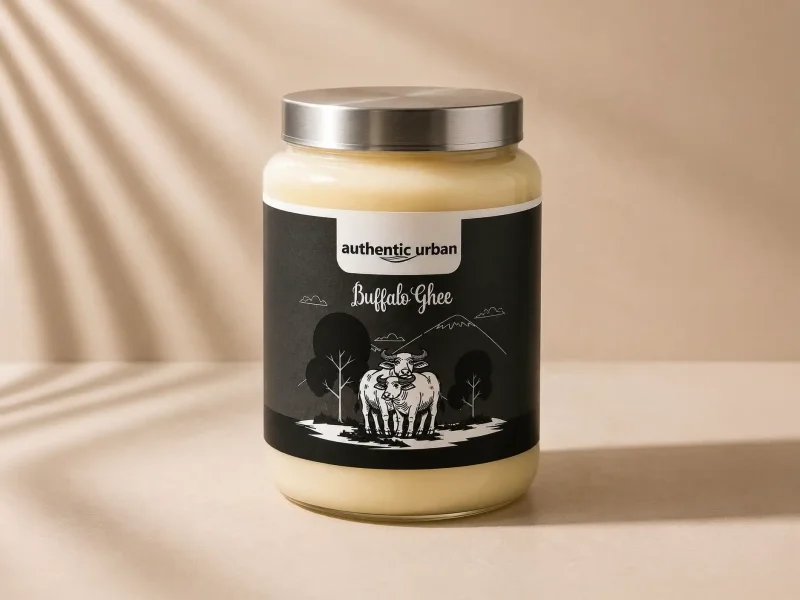 1 Litre
Each order is cooked after you place it, and the packing video is of that batch. Past order videos are on the shop.
FAQ
Does eating ghee prevent stretch marks?
No study shows it does. Stretch marks come from skin stretching fast, from genes, and from hormones, not from a missing fat. Eating extra ghee in pregnancy adds calories, and quick weight gain is one of the things that raises the chance of marks. One or two teaspoons a day on dal, roti, or khichdi is a normal amount for most women; your doctor decides if you need more or less.
Is cow ghee or buffalo ghee better for stretch marks?
Either works the same way on skin, because both are almost pure milk fat that sits on top and slows water loss. Cow ghee is softer and melts faster between the palms, which makes it easier for a daily belly massage. Buffalo ghee sets firmer, and some people like it as a thicker balm for hips and thighs. Freshness matters more than the animal: skip any ghee that smells sour.
Can I mix turmeric or coconut oil with ghee for stretch marks?
Coconut oil, yes: a half and half mix spreads further and feels lighter in summer. Turmeric adds nothing proven for stretch marks and stains skin, clothes, and bedsheets yellow for days. Skip lemon juice, camphor, and essential oils on a pregnant belly, as they can sting or irritate stretched skin. Start with plain ghee for two weeks, so you know what your skin reacted to if a rash appears.
Can men or teenagers use ghee on stretch marks?
Yes. Marks from a growth spurt, a fast change in weight, or gym work on the shoulders and arms are the same kind of skin tear. The same routine applies: a patch test, half a teaspoon massaged in after a bath, twice a day. Ghee can soften the itch of new marks; it will not remove them. Wide purple marks with other body changes, or marks after steroid use, need a doctor.
Will ghee on the belly cause pimples or a heat rash?
It can, on some skin. A thick layer of any fat on a warm, sweaty belly can block pores and cause small red bumps, most often in humid summer months. Use a thinner layer, massage it in for longer, and wipe off what is left after ten minutes. In summer, one massage after the night bath may be enough. If bumps keep coming, stop the ghee and switch to a light, unperfumed lotion.
How do I get ghee stains out of clothes?
Blot the fresh spot with a dry cloth, sprinkle it with talc or cornflour to soak up the fat, and leave it for an hour. Brush it off, rub a drop of dishwashing liquid into the stain, and wash in the warmest water the fabric allows. Check the stain before drying, as heat sets it. Keep old cotton nightwear for the massage weeks, and give the ghee five minutes to sink in.
About the editorial team
Authentic Urban TeamBilona ghee makers, Gir Somnath, Gujarat
We are the Parmar family in Gir Somnath, Gujarat. We have made ghee here since 2016 and sold it online since 2025. We make only Bilona ghee, test it every month, and anyone is welcome to visit and watch it being made. Our Gir cows and Jafarabadi buffalo are grass-fed village animals that graze near the Gir forest, with no hormones or milk boosters. We set their milk to curd, churn it, and cook the makkhan on a wood chulha. These articles come from that kitchen and from what customers ask us on WhatsApp. We are ghee makers, not doctors.
Sources
- Stretch marks in pregnancy, NHS. Checked 28 Sep 2026.
- Stretch marks, NHS. Checked 28 Sep 2026.
- Topical preparations for preventing stretch marks in pregnancy (Brennan M, Young G, Devane D, 2022), Cochrane. Checked 28 Sep 2026.
- Stretch marks: Why they appear and how to get rid of them, American Academy of Dermatology. Checked 28 Sep 2026.
- Itching and intrahepatic cholestasis of pregnancy (reviewed 24 February 2026), NHS. Checked 28 Sep 2026.