Ghee for Lips: Dry, Chapped & Dark Lips Care Guide
Ghee for lips is a practical home option when commercial balms only seal dryness without feeding thin lip skin — a pea-size of pure A2 ghee on damp lips overnight may soften cracks in days and support a healthier natural tone over weeks, not overnight bleaching. It is not a medical treatment for pigmentation disorders, smoker's melanosis, or allergic cheilitis — patch test first, use clean ghee, and see a dermatologist if lips stay dark, painful, or swollen.
This guide covers when ghee may help, how it compares to petroleum jelly, three kitchen masks, and which jar to trust. For full-face context start with best organic ghee for skin and hair; for occlusive face routines see ghee slugging vs Vaseline.
Ghee for Lips at a Glance
Note: This article is general skincare information, not medical advice. Persistent lip pain, bleeding, white patches, or sudden colour change need a dermatologist — ghee supports comfort but does not diagnose or treat lip disease.
Quick Answer: Does Ghee Work for Lips?
For dryness and chapping, often yes. Ghee acts as an emollient and occlusive: it may trap water on damp lips and supply small amounts of fat-soluble vitamins and fatty acids that thin vermillion skin can use. Many people notice softer lips after one to three nights.
For dark or “smoker's” lips, maybe — slowly. Ghee may help when darkness is worsened by dehydration, flaking, sun, or barrier damage. It will not replace quitting smoking, SPF, or prescription depigmentation when melanin change is deep. Expect weeks, not days.
What you need besides ghee: stop lip licking, choose fragrance-free daytime balm or SPF, and use verified pure fat — adulterated jars can sting. Label checks: how to identify pure ghee.
If you are comparing ghee to your current tube, ask one question: does your balm only seal, or does it also feed? Petroleum-heavy sticks excel at windburn sealing but add zero vitamins. Ghee does both jobs modestly — which is why many Indian households already reach for the kitchen jar when a child's lips crack in December.
Why Lip Skin Needs Different Care
The pink part of your lip (vermillion) has almost no stratum corneum and no sebaceous glands. It cannot oil itself the way your cheeks do. Matte lipstick, office AC, winter wind, and habitual licking strip water fast — then you reach for a mint balm that stings and restarts the cycle.
No oil glands
Lip skin is thin and cannot self-moisturise — it loses water fast in AC, winter, and matte lipstick.
Quick turnover
Flakes build in days; gentle emollients plus soft exfoliation (sugar + ghee scrub) may help texture.
Easy irritation
Licking, citrus, menthol balms, and fragrance can darken and crack lips — fix habits alongside ghee.
That is why “just drink more water” fails without an occlusive at night. Ghee is one occlusive that also carries nutrients — similar logic to using ghee on cracked heels for thick skin, but with a much lighter dose on lips.
Lip skin also turns over quickly. Dead cells can stack in 48–72 hours when you are dehydrated, making lips look dull or grey-brown even without true melanin increase. Gentle removal (soft cloth or a weekly sugar–ghee scrub) plus overnight occlusion often improves appearance before any lightening ingredient would show an effect.
What Ghee May Do for Your Lips
Clarified butter is mostly saturated and monounsaturated fats with fat-soluble vitamins. On lips, the realistic wins are barrier support and softness — not guaranteed colour change. Nutrient detail: ghee nutrition facts.
Vitamin E in ghee may help neutralise some free radicals from pollution and UV when used as part of a broader sun-smart routine — but lip SPF still matters more than any antioxidant in fat. Vitamin A-related compounds support normal skin turnover in theory; on lips you notice turnover as fewer hanging flakes, not as a chemical peel effect.
Occlusive moisture
Fatty acids may reduce transepidermal water loss overnight — similar role to balm, with nutrients.
Vitamin E & A context
Ghee carries fat-soluble vitamins that may support barrier repair in thin skin — not a bleaching drug.
Gentle massage
30–60 seconds of circular massage may improve circulation and soften scale — do not scrub raw cracks.
Edible safety
Pure ghee is food-grade — useful if you ingest small amounts while eating; still use a clean applicator.
Chapped Lips and Winter Cracks
When lips peel or split at the corners, priority is stopping mechanical damage: no picking, no citrus until healed, no menthol tubes. A pea-size ghee film on slightly damp lips after dinner may reduce morning flakes faster than wax sticks that sit on top without absorbing. If corners stay fissured (angular cheilitis), rule out fungal infection with a doctor — ghee alone may not fix that.
In North Indian winters, indoor heaters plus outdoor wind create a common pattern: tight lips by afternoon, bleeding by night. Layering helps — drink water, run a humidifier if possible, use a plain daytime balm, then ghee after dinner when you are done eating. Reapply after brushing teeth; toothpaste surfactants strip lip oils for many people.
Dark Lips and Pigmentation Context
Lip darkening has multiple drivers. Ghee may help the subset tied to dryness and scale buildup by improving texture so natural colour shows through. It is not a substitute for dermatology when the issue is melasma-like lip pigmentation, medication side effects, or years of smoking.
Dehydration & licking
Most common fixable cause — ghee overnight plus daytime water and lip SPF.
Sun & caffeine
UV and chai staining darken over years — ghee helps barrier, not UV block.
Smoking & pollution
Oxidative stress darkens lip edges; ghee may support barrier but quitting matters more.
Allergic lip balm
Fragrance and menthol cycles worsen pigmentation — simplify to plain ghee for 2 weeks trial.
For perioral darkness (shadows around the mouth), read ghee for dark circles — different skin thickness, same honesty about limits.
Which Ghee to Use on Lips
Use plain, unflavoured, food-grade ghee with a clean nutty aroma when warmed — not garlic ghee, not blended vanaspati. A2 Bilona cow ghee is the usual choice in Indian homes because the fat profile is familiar and the jar is already trusted for eating. Compare milk types: A2 vs A1 ghee. Method context: Bilona ghee process.
Odour-sensitive users: regular ghee has a mild buttery smell. For near-odourless topical fat, some people prefer shata dhauta ghrita (100-times washed ghee) on face and lips — more labour, lighter scent.
Buying filter for any beauty use: how to choose ghee. Store in a cool dark place; rancid fat irritates lips faster than it irritates your pantry shelf.
Ghee vs Petroleum Lip Balm
Practical split many readers use: petroleum or heavy balm for daytime windburn or mountain trips; ghee overnight for nourishment. Face-wide comparison: ghee slugging guide.
Daytime Habits That Support Ghee at Night
Overnight ghee fails when daytime habits undo the barrier. Treat night treatment as half the plan — the other half is what you do between 7 a.m. and bedtime.
Stop lip licking Saliva enzymes dry the vermillion within minutes — ghee at night cannot fix daytime licking damage.
Use lip SPF SPF 30+ lip balm in daylight; ghee has no meaningful UV filter for pigmentation prevention.
Hydrate from inside Water and humidifier in AC offices support occlusives — fat alone does not replace systemic hydration.
Simplify daytime balm Fragrance-free beeswax or petroleum during work; save ghee for night when you are not eating or talking.
Caffeine and chai: tannin staining on cups can darken lip edges over years. Wipe lips after drinking or use a straw for iced chai; ghee may slow new staining but does not erase old melanin deposits quickly.
Matte lipstick cycles: long-wear formulas pull lipids out. Use ghee as a thin primer (see below) or switch to creamier formulas on crack-prone weeks.
Air travel and AC: cabin air is brutal on lips. Reapply plain balm hourly in flight; reserve ghee for hotel nights when you are not talking or eating for hours.
Commercial Lip Balm Ingredients to Limit
Not every tube is evil — but some common ingredients keep lips dependent. Menthol, camphor, and phenol create a cooling tingle that feels like relief while increasing evaporation long term. Strong fragrances and citrus oils irritate the lip line and can worsen pigmentation in sensitive skin.
“SPF lip balm” is worth using, but check that it is a dedicated lip SPF, not face sunscreen transferred casually — some filters sting broken lip skin. If a balm lists alcohol high in the ingredient deck, it may dry you out despite marketing words like “intensive repair.”
Ghee sidesteps synthetic fragrance and menthol when you use a clean jar — another reason Indian readers trial kitchen fat before buying a fifteenth pink tube. If you prefer bought balms, choose short ingredient lists: wax, oil, maybe vitamin E, and SPF when needed.
DIY Ghee Lip Masks and Scrubs
Three kitchen recipes cover most lip goals. Always patch test on the inner arm 24 hours before trying turmeric or saffron on the mouth.
Sugar scrub (weekly)
1 tsp ghee + pinch fine sugar. Massage 30 sec, rinse warm. Skip on bleeding cracks.
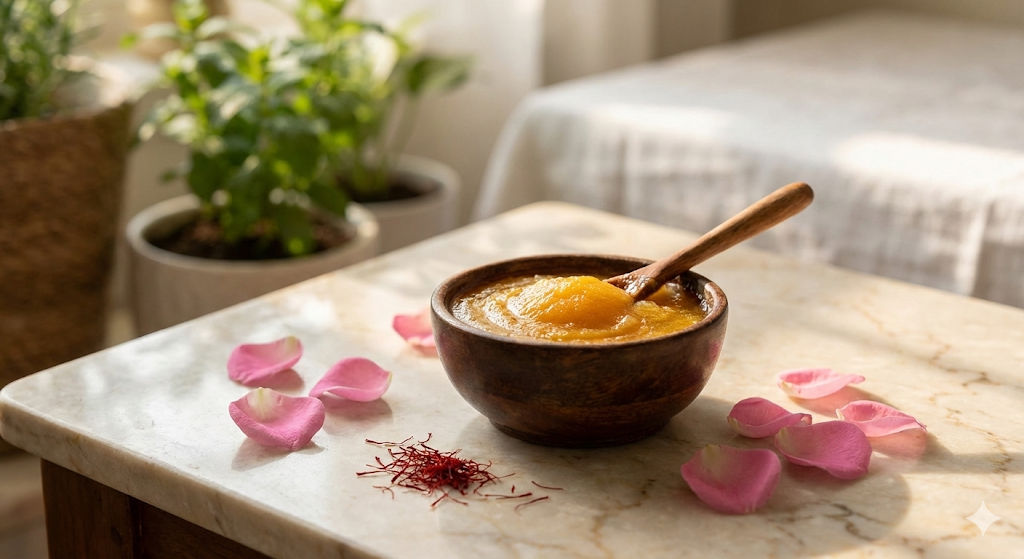
Saffron mask (2×/week)
1 tsp ghee + 2–3 saffron strands, soak 10 min. Thin layer overnight for tone support.
Honey seal (dry nights)
½ tsp ghee + few drops honey on damp lips. Read honey + ghee Ayurveda cautions first.
Sugar scrub detail: use fine granulated sugar, not rock salt. Massage with feather pressure for 20–30 seconds only. Rinse with lukewarm water, pat dry, then apply a thin ghee layer the same night. Do not scrub active splits — wait until the wound surface closes.
Saffron mask detail: crush strands in a spoon with a drop of warm ghee before mixing the rest; steeping 10 minutes releases colour. A little goes far — overdose stains skin and pillowcases.
Honey mix detail: raw honey is sticky and can feed yeast on cracked corners in rare cases. If corners are red and wet, skip honey until a doctor clears infection.
Turmeric + Ghee (Use With Caution)
Social media mixes 1 tsp ghee with a pinch of haldi for “pink lips.” Turmeric may have mild antioxidant activity, but it stains skin yellow and can irritate sensitive lip lines. If you try it, limit to once weekly, rinse in the morning, and stop if burning occurs. This is folk practice, not clinical depigmentation. Broader honey rules: ghee and honey in Ayurveda (equal-weight mixing warnings apply to some internal uses — for lips, tiny honey amounts are different, but still patch test).
Ghee Before Lipstick
A rice-grain dab melted on lips 10 minutes before matte lipstick may reduce settling into lines — blot excess so colour grips. For whole-face prep and anti-ageing context (not lip-specific), see ghee and retinol-style skincare and ghee face pack recipes.
Overnight Ghee Lip Routine (Step by Step)
Run this nightly for 14–28 days before judging pigmentation; assess dryness daily.
- Cleanse: Remove lipstick with gentle balm or micellar water; pat dry.
- Dampen: Lightly mist or pad with lukewarm water — occlusives work better on slightly hydrated skin.
- Apply: Warm a pea-size amount of ghee between fingers; press and massage 30–60 seconds.
- Overnight: Leave a thin film; wipe excess from skin outside the lip line if you are acne-prone.
Morning: rinse with water only or a soft cloth — harsh foaming cleansers on lips restart dryness. Reapply SPF lip balm before stepping out.
Hygiene: use a clean spoon or cotton swab to take ghee from the jar — not fingers after meals. Consider a 15–20 g side jar decanted weekly for topical use so your main cooking ghee stays food-safe. If ghee granulates in winter, warm the spoon in hot water before scooping; grainy texture on lips feels gritty and discourages consistent use.
Tracking results: take a photo in the same bathroom light every Sunday morning before washing your face. Compare texture and flake, not just colour — colour shifts lag behind hydration gains. If there is zero improvement in comfort after 10 nights, the issue may not be dryness (allergy, infection, thyroid-related cheilitis) and needs medical review.
Common Myths About Ghee for Lips
❌ Myth: "Ghee cures dark lips in one week."
Reality: Hydration can improve overnight; true colour change follows skin turnover (weeks). Smoking, hormones, and genetics need more than a fat balm.
❌ Myth: "Any yellow fat in a jar works the same."
Reality: Adulterated or vanaspati-mixed “ghee” can irritate thin lip skin. Verify source and aroma before putting it on your mouth.
❌ Myth: "Turmeric ghee masks are safe every night for everyone."
Reality: Turmeric can stain and irritate sensitive skin. Use sparingly (1–2× weekly), patch test, and skip if you have active eczema on the lip line.
❌ Myth: "Ghee replaces SPF on lips."
Reality: It has no meaningful sun protection factor. UV is a major darkening driver — use lip SPF in daytime.
Smoker's Lips and Realistic Timelines
Tobacco smoke drives lip darkening through heat, tar contact, and oxidative stress on a thin barrier. Ghee may improve comfort and surface texture when you reduce smoking or quit, but it cannot reverse years of melanin-rich staining as fast as social media claims suggest.
A realistic home trial: plain ghee nightly plus saffron mask twice weekly for eight weeks, with daily SPF and no menthol balms. Photograph weekly in the same light. If the lip edge is still uniformly dark with no texture improvement, dermatology options (topical acids, lasers, or pigment-specific treatments under supervision) outperform more kitchen experiments.
Continuing to smoke while expecting ghee to “bleach” lips wastes time and money. The highest-return step for smoker's lip colour is reducing exposure — ghee supports the skin that remains after that change.
When to See a Dermatologist for Lips
Book a visit if any of these appear: painful splits that do not heal in two weeks, white patches, sudden darkening without sun or habit change, blisters grouped like cold sores, swelling after a new balm, or lip pain with mouth ulcers. These patterns may indicate infection, contact allergy, vitiligo, or precancerous changes — none of which respond safely to DIY fat alone.
Children with chronic lip licking dermatitis may need paediatric skin care, not repeated turmeric masks. Pregnant readers with painful fissures should mention it at the next antenatal visit — iron or B-vitamin deficiency sometimes shows at the mouth first.
Who Should Patch Test or Avoid
Active cold sores
Do not share jars or massage over blisters — see a doctor for antivirals.
Eczema or cheilitis
Dermatologist first — fats alone may not fix fungal or allergic lip lines.
Turmeric masks
Can stain and sting — patch test; not for nightly use on inflamed skin.
Acne around the mouth? Keep ghee on the vermillion only. Ongoing lip dermatitis? Dermatologist first. Using ghee on the face elsewhere — start with ghee for acne-prone skin rules (non-comedogenic claims vary by person; patch test still wins).
Traditional navel ghee for systemic dryness is a separate topic — some Ayurvedic sources link belly-button oil to lip moisture, but direct lip application is the evidence you can feel. Reference: ghee in the belly button.
Use Verified A2 Ghee on Your Lips
Lips ingest what you apply. Authentic Urban Bilona A2 ghee is video-verified — one clean jar for kitchen and a small scoop for nightly lip care.
✅ Free Delivery • 🛡️ 100% Guarantee • 🔬 Lab-Tested
See How Your Ghee Is Made
Adulterated fat stings thin lip skin. Watch the Bilona process before you put ghee on your mouth nightly.
Conclusion
Ghee for lips earns a place in Indian home care when you want edible, nutrient-carrying moisture instead of another petroleum tube. It may soften chapping quickly and support a healthier natural lip tone over weeks if dryness and habits were the main problem.
Keep expectations honest: no miracle pink in seven days, no SPF, no replacement for dermatology on stubborn pigmentation. Use pure A2 ghee, patch test, run the overnight routine for a month, and fix daytime licking and sun exposure. If lips still suffer, the next step is medical lip care — not a larger ghee scoop.
Start tonight with one pea-size dab on damp lips after dinner. Most readers know by morning whether the texture feels right; colour follows only when dryness and habits were the real problem.
Ready for Pure A2 Ghee?
One verified jar for dal, roti, and your nightly lip ritual — clean fat you can trust on your mouth.
Frequently Asked Questions
Can ghee make my lips pink?
Ghee may help lips look healthier and slightly rosier by improving hydration, softening flaky skin, and supporting gentle massage that boosts blood flow. It does not bleach lips like a cosmetic dye. Any “pink” effect is usually your natural lip colour showing through once dryness and buildup are reduced — typically after 2–4 weeks of consistent overnight use, not one night.
Does ghee help with dark or smoker's lips?
It may support gradual improvement when darkness is partly from dryness, sun, caffeine stains, or mild barrier damage. Smoking-related lip darkening is stubborn; ghee can moisturise and deliver antioxidants (vitamin E, carotenoids) but is not a clinical depigmentation treatment. Pair with sun care, reduce irritants, and see a dermatologist if colour does not shift after 8–12 weeks.
Is ghee better than Vaseline for lips?
Different jobs. Petroleum jelly is an occlusive — it seals water in well. Ghee is also occlusive but carries fat-soluble vitamins and fatty acids that may nourish thin lip skin. Many people use a thin ghee layer overnight and petroleum only when windburn needs a heavy seal. For face-wide slugging context see ghee slugging vs Vaseline.
How long until chapped lips feel better with ghee?
Severe cracking often feels softer after 1–3 overnight applications if you are not licking lips or using matte lipstick during the day. Pigmentation and texture changes usually need 2–4 weeks; deeper smoker's staining may take longer or need medical options.
Does ghee clog pores around the mouth?
Lip skin has no oil glands; clogging is rare on the vermillion itself. If you have acne-prone skin at the lip border, use a rice-grain amount, keep product on the lip line only, and patch test 24 hours first. Oily or fragrance-heavy balms on surrounding skin are a bigger breakout trigger than pure ghee for most people.
Can I use cooking ghee from the kitchen jar on my lips?
Only if it is pure, unflavoured, and you use a clean spoon — never double-dip after eating. For daily lip use, a small dedicated topical jar of verified A2 Bilona ghee reduces contamination and adulteration risk. Learn label checks in how to identify pure ghee.
Is ghee lip balm safe during pregnancy?
Plain ghee on lips is generally considered low risk because ingestion amounts are tiny, but pregnancy skin can react unpredictably. Patch test, avoid essential oils in DIY mixes unless your doctor approves, and discuss persistent lip cracks or colour changes with your obstetrician.
What if ghee tastes rancid or irritates my lips?
Stop use. Rancid ghee smells sharp or soapy, may sting, and suggests oxidation or poor storage. Fresh Bilona ghee smells nutty when warmed. Irritation can also mean allergy, herpes flare, or contact dermatitis from turmeric in masks — switch to plain ghee only and seek care if swelling or blisters appear.
About the editorial team
Authentic Urban TeamBilona Ghee Makers & Editorial Team
This Blog is Reviewed by our nutrition and research team for practical accuracy and buyer clarity.
Trusted since 2016, we bring 9 years of offline ghee business experience and 1 year of online selling. We only work with curd-based Bilona ghee, and our articles are shaped by real production experience, customer questions, and hands-on quality checks.