Ghee for Tiffin: Pack Roti That Stays Soft Till Lunch
Ghee for tiffin is a packing job, not a recipe: brush ¼–½ tsp on each roti while it is still steaming, wrap the stack dry, and keep dal in its own box. That thin hot coat is what is still pliable at 1pm. If the roti is already cool, you missed the window. Ghee seals steam; it cannot put moisture back.
This is not another chapati tutorial. For rolling and puffing, use the ghee chapati recipe. Here the question is what survives a 4–8 hour steel dabba — office, school, coaching, the train.
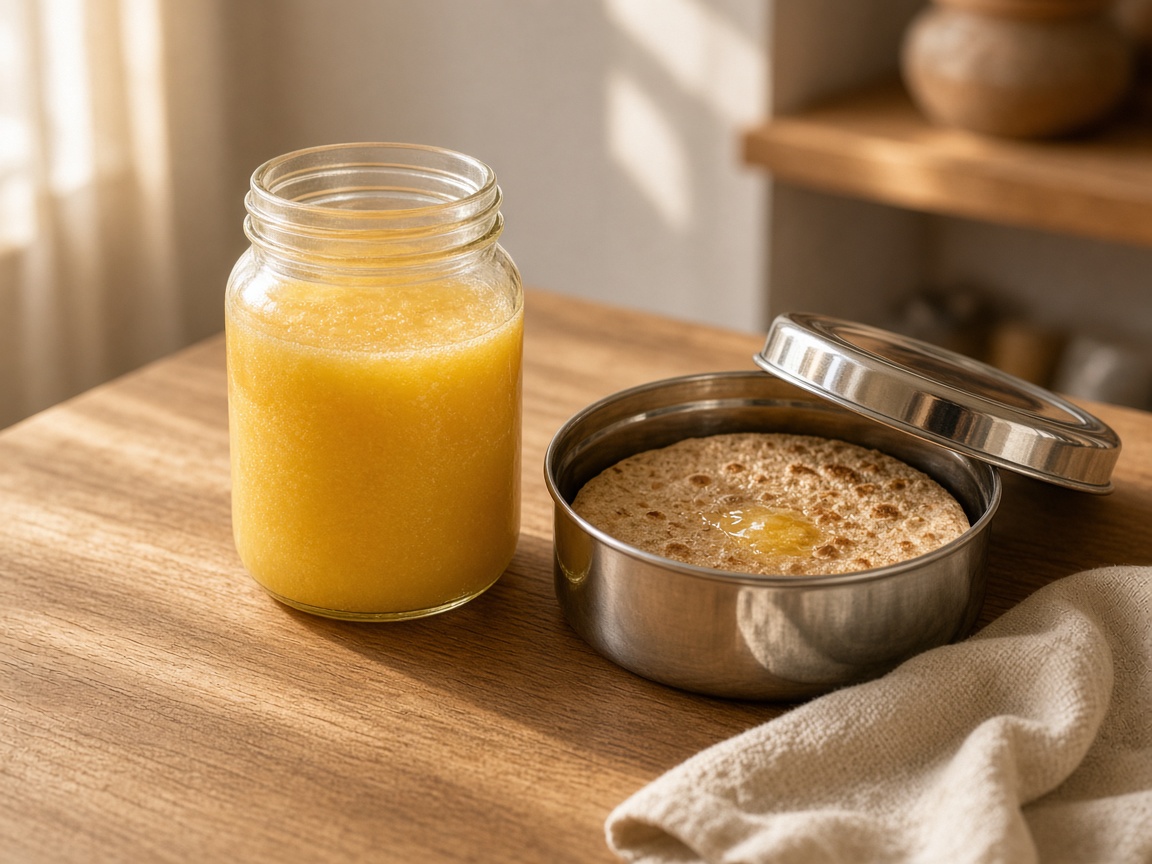
Tiffin Ghee at a Glance
How Much Ghee for Tiffin, and When to Put It On
Timing beats quantity. Hot bread drinks a small amount of fat and holds the steam that would otherwise leave through the surface. Cold bread rejects the same fat. You see it: grains sitting white on a beige roti that will be cardboard by lunch.
Daily portions for eating ghee are a separate question — see how much ghee per day. Tiffin packing is thinner than a table serving. You are coating, not feeding the box a spoon.
On the roti
¼ tsp child roti, ½ tsp adult chapati, brushed the second it leaves the tawa. Both sides if the stack will sit past 5 hours.
In the dough
Optional: 1 tsp ghee per 2 cups atta after the first knead. Helps rolling. Does not replace the hot brush.
Dal and rice
Tadka belongs in the pot. Rice can take ½ tsp tossed while hot. No raw blob on cooled food in the box.
Paratha / thepla
Layering ghee already did the work. Cook on the tawa with ghee; skip an extra spoon at pack time.
On the roti (the ¼ tsp that actually matters)
Slide the roti off the tawa. Brush immediately. You want a sheen, not a puddle. For a 6-inch chapati, ½ tsp is plenty; a school roti needs less. If the commute runs past 6 hours, brush both sides. Stack as you go so the batch stays warm enough for the next brush to melt.
In the dough (optional, small)
A teaspoon of ghee worked into 2 cups of atta after the first knead makes rolling easier. It does not replace the hot brush. Skip dough ghee if you already keep the dough soft and well rested. Technique lives on the chapati page; do not double the fat thinking the tiffin will thank you.
In dal, rice, and sabzi
Tadka goes into the pot, not into the tiffin at 7:40am. A finishing spoon on hot dal tadka or tossed through ghee rice while it is steaming is fine. A raw lump on cooled food becomes a pale cap. Khichdi packed for the same day can take its usual finishing ghee in the pot, then cool slightly before the lid goes on.
What not to do at pack time
Do not melt ghee in the microwave and pour it over a cold stack. Do not hide a spoon in the pickle box “for later” unless there is a way to warm the food. Do not stir extra ghee into dal that already has tadka. The seal is already on the bread, or it is not.
Roti, Paratha, and Thepla — What Survives 6 Hours
Thin bread dies first. Layered bread travels. That is the whole map.
Plain roti / chapati
Soft dough, hot dry tawa, puff, then the brush. Overcooked roti is already dry; ghee will not save it. Under a cotton wrap, a well-made chapati stays tearable 4–6 hours. Past that, even a good brush only slows the hardening. If lunch is at 2:30 after a long bus, pack paratha that day.
Paratha and stuffed paratha
Paratha is the tiffin bread. Layering ghee before the spiral is what keeps flakes from fusing into a slab. Cook on the tawa with ghee; cool 1 minute so the surface is not wet; wrap. Full method: ghee paratha recipe. Stuffed: aloo paratha holds 6–8 hours if you do not trap steam against potato filling — vent, then wrap. A pickle dab on the side, not on the bread.
Thepla, leftover roti, millet roti
Thepla is built for travel: oil or ghee in the dough, spices, a drier crumb. A light tawa ghee is enough. Leftover night roti is a poor tiffin unless you reheat on a tawa with a fresh brush in the morning. Bajra and jowar harden faster than wheat — eat those hot at home, or mix some atta in if they must travel, and brush both sides.
Dal, Rice, and Dry Sabzi in a Steel Box
Wet food and ghee-brushed bread should not share a compartment. The sabzi’s steam undoes the fat film you just built.
Dry roast sabzis travel: jeera aloo, beans, bhindi that is actually dry. Pack them barely warm, not piping, so condensation does not rain under the lid. Dal-rice is a two-box meal. Heat the tadka in the pot using normal cooking with ghee discipline — nutty, not grey smoke — then portion. If the office has no microwave, accept that dal will be room-temp; ghee tadka still tastes like ghee when it is good fat. Cream-method tins often taste like nothing by then.
Summer note: Ghee does not make wet dal, kadhi, or sambar safe for 7–8 hours in a hot bag. For May and June commutes, pack dry sabzi, thepla, or paratha. Use an office fridge if the meal is gravy. This is packing hygiene, not a scare line about ghee.
Cow Ghee vs Buffalo Ghee Once the Tiffin Cools
The jar that smelled perfect on a hot roti can feel wrong at 1pm in AC. Cow ghee stays lighter. Buffalo ghee sets up. Neither is “bad”; they are different once the food is no longer hot. Full fat comparison: cow vs buffalo ghee.
| Factor | Cow ghee | Buffalo ghee | Winner |
|---|---|---|---|
| Once the box hits AC | Stays softer, easier to tear | Sets firmer, can feel waxy | Cow ghee ✓ |
| Kids’ plain roti | Lighter aroma, less heavy | Rich; often too much | Cow ghee ✓ |
| Paratha / thepla tiffin | Fine, a bit lean | Better body at room temp | Buffalo ghee ✓ |
| Smell after 5 hours in steel | Still reads as ghee if the jar was fresh | Heavier; can dominate sabzi | Cow ghee ✓ |
| White film on cooled food | Thinner, melts in the hand | Thicker pale coat | Cow ghee ✓ |
Verdict: Default cow ghee for kids’ roti and AC offices. Reach for buffalo when the bread is paratha or thepla and you want body at room temperature.
White film on cooled food is normal. Ghee is solid in a 22°C office. Cow ghee usually softens against warm fingers. If the smear was applied cold, those specks were never melted — that is a timing miss, not a fridge problem. Grainy Bilona ghee is a quality cue in the jar; it still has to be liquid on the bread. Storage of the jar itself is separate: ghee storage shelf life.
Packing Sequence That Does Not Wreck the Ghee Seal
Order of operations, from the tawa to the bag:
- Cook and brush in one motion. Do not park a pile of dry rotis on a plate “to ghee later.”
- Vent 30–60 seconds. Wild steam out. Then wrap. Immediate lid on a screaming-hot stack makes water, then leather.
- Cotton or parchment around the bread. Steel against bare roti sweats.
- Dry sabzi in its box, dal in another. Close both. Do not press roti down into gravy to “save space.”
- Leave the jar in the kitchen. The fat that matters is already on the food.
Brush hot Ghee has to melt into the surface. Cold grainy smears stay as white dots.
Vent 30–60 seconds A short uncovered stack dumps wild steam. Then wrap. Immediate airtight = soggy, then hard.
Cotton, then steel Cloth or parchment around the roti stack. Steel lid on the outside, not on bare bread.
Wet food separate Dal, raita, and gravy get their own box. Roti touching wet sabzi loses the ghee seal in an hour.
Insulated bags help heat, not texture. A vacuum box that traps steam against roti will undo a perfect brush. Winter packing can be tighter; monsoon and May need more venting and drier sabzi. If a jar already smells off at breakfast, do not put it on a child’s dabba — rancid fat in a closed steel box by noon is worse: does ghee go rancid.
Common Tiffin Ghee Mistakes
Cold smear at the door
You remember ghee while packing the bag. The roti is already cool. Those grains never melt. Missed window.
Roti sitting in sabzi
One-box packing looks efficient. Moisture from aloo or bhindi soaks the stack. By lunch it is paste on one side, cardboard on the other.
A “just in case” spoon in the lid
Solid ghee in a compartment is useless without a way to warm food. It arrives as a pale lump. Brush it at home instead.
8-hour wet dal in May
Ghee tadka does not make kadhi or sambar travel-safe in 40°C. Pack jeera aloo, thepla, or dry beans for those days.
Common Tiffin Ghee Myths
❌ Myth: "More ghee in the box means softer roti at 1pm."
Reality: Softness is sealed in the first 30 seconds off the tawa. Extra ghee at pack time soaks the cloth, then the bread dries out harder once that moisture leaves. A thin hot brush beats a cold spoon every time.
❌ Myth: "Oil and ghee do the same job in a tiffin."
Reality: Both are fat. Ghee sets a slower-drying film and keeps a cooked-milk aroma after hours in steel. Refined oil thins out and leaves roti tasting like the sabzi it sat next to. Method for the bread itself: ghee chapati recipe.
❌ Myth: "Ghee in dal keeps leftover lunch safe till evening."
Reality: Fat is not a fridge. Wet dal, sambar, or kadhi sitting 7–8 hours in 38°C weather can still spoil. Pack dry sabzi for long May commutes; keep wet dal for shorter days or an office fridge.
❌ Myth: "Any supermarket jar tastes the same once the food is cold."
Reality: Cream-method ghee often goes flat and slightly waxy in a steel box. Fresh Bilona ghee still smells like the tadka you made at 7am. If the jar already smells like packing oil at breakfast, it will taste like that at lunch.
Which Ghee to Keep on the Tiffin Counter
You taste this fat cold. That is a harsher test than tadka. A jar that is only “fine” in a hot kadhai can taste like packing wax on a 1pm roti.
For weekday dabbas, keep a smaller jar of lighter A2 cow ghee by the tawa: grain you can see, aroma that still reads as cooked milk-fat, a dry spoon every time. Cream-method supermarket tins often go flat after a few hours in steel. Checks before you trust a new brand: how to identify pure ghee. If you want a jar chosen for direct eating on roti, start with best cow ghee in India. Paratha-heavy weeks: best buffalo ghee in India.
Authentic Urban fits this lane when you want proof beyond the label — Bilona method, made after the order, batch packing video. Freshness shows up in a tiffin in a way a 9-month-old tin does not. If the ghee smells like the kitchen at 7am, it will still smell like food at 1pm.
Keep a Fresh Cow Ghee Jar by the Tawa
Weekday roti tiffins want lighter A2 Bilona cow ghee with batch video — aroma that still reads after hours in steel, not a waxy supermarket tin.
✅ Free Delivery • 🛡️ 100% Guarantee • 🔬 Lab-Tested
Kids’ Tiffin vs Office Tiffin
Same fat, different mistakes. Kids need less ghee and drier packing — a soaked roti comes home uneaten. Office AC makes buffalo ghee feel heavier than it did at the tawa. Coaching-class days that run past 2pm should be paratha or thepla, not four thin phulkas.
This page is packing mechanics. It is not a child-nutrition plan and not infant feeding. If the child already eats roti at home, a light cow-ghee brush is the usual method. Overnight room-temp packing in summer is a no for both school and office.
See the Jar Before It Hits the Tiffin
Tiffin ghee is eaten hours later, often cold. Watch the batch — Authentic Urban A2 Bilona ghee with packing video, so the fat on the roti is the one you actually ordered.
Conclusion
Tomorrow morning: hot tawa, brush ¼–½ tsp ghee for tiffin the second each roti comes off, vent a minute, wrap dry, dal in another box. Cow ghee for kids and AC. Buffalo for paratha days. Skip the panic spoon at the door.
If the roti is still hard at lunch after that sequence, the dough or the tawa was the problem — not the missing extra ladle. Fix the bread. Keep the fat thin and early.
Pack Tomorrow’s Tiffin with Fresh A2 Ghee
Authentic Urban bilona A2 ghee — light enough for a school roti, still aromatic in a steel box at lunch, with video proof on the batch.
Frequently Asked Questions
Does ghee keep roti soft in a tiffin box?
Yes, if you brush ¼–½ tsp on each roti while it is still steaming, then wrap the stack so leftover steam does not turn into water. The fat seals moisture already in the bread. Ghee smeared on a cooled roti sits as white specks and does not bring softness back.
How much ghee should I put on each roti for office lunch?
A thin brush: about ¼ tsp for a child-size roti, ½ tsp for a full adult chapati. That is enough to shine, not pool. Extra ghee in the dough is optional (1 tsp per 2 cups atta). Drowning the roti makes it soggy in the cloth, then hard once the steam leaves.
Cow ghee or buffalo ghee for a school tiffin?
Cow ghee for school and AC offices. It stays softer once the box cools and the aroma stays lighter on plain roti. Buffalo ghee has more body; it is better on paratha or thepla that will be eaten at room temperature, but it can feel waxy on a thin roti in a cold office.
Should I add ghee to dal before packing?
Put the tadka in the pot while cooking. Do not add a raw spoon of ghee into the tiffin at pack time. In a closed steel box that extra fat floats, then sets as a pale lid on cooled dal. It does not keep the dal safe in May heat, and it tastes greasy at lunch.
Can I pack ghee-smeared roti overnight?
For a next-day office pack, cook, brush, cool fully, then refrigerate stacked with parchment. In the morning, 10–15 seconds per side on a hot tawa beats eating fridge-cold roti. Overnight at room temperature in summer is a food-safety problem, not a ghee problem.
Why does ghee look white and waxy in my lunchbox?
Ghee is solid below roughly room-AC temperature. On a cooled roti it looks pale; that is physics, not spoilage. Cow ghee usually softens again in the hand. Buffalo ghee sets firmer. If the smear was applied cold, those white grains never melted in the first place.
Is oil better than ghee for kids’ tiffin?
Neutral oil works if the house avoids dairy. It does not hold aroma the same way, and it evaporates faster, so roti dries sooner. For children who already eat ghee at home, a light cow-ghee brush on hot roti is the usual Indian packing method — not a thick layer, and not a medical dose.
About the editorial team
Authentic Urban TeamBilona Ghee Makers & Editorial Team
This Blog is Reviewed by our nutrition and research team for practical accuracy and buyer clarity.
Trusted since 2016, we bring 9 years of offline ghee business experience and 1 year of online selling. We only work with curd-based Bilona ghee, and our articles are shaped by real production experience, customer questions, and hands-on quality checks.