Ghee Oatmeal Recipe: Sweet or Masala, and How Much Ghee
For a ghee oatmeal recipe for one, cook 40 g (½ cup) of rolled oats in 200 ml of milk and 100 ml of water for 5 to 7 minutes, take it off the flame, and stir in 1 teaspoon of ghee. That one teaspoon is enough to make the bowl glossy and smell of ghee. The bowl comes to about 365 kcal with half a banana on top.
How do you make ghee oatmeal?
Cook the oats in milk and water, take the pan off the flame, and stir in a teaspoon of ghee last. Adding ghee at the end keeps its smell strongest and stops it from sitting on top as a yellow layer. From cold pan to bowl it takes about 12 minutes with rolled oats. If you want a nuttier bowl, toast the dry oats in the ghee first; both ways are in the next section.
Ingredients (one bowl)
- 40 g (½ cup) rolled oats
- 200 ml milk and 100 ml water
- 1 tsp ghee (about 4 g)
- A pinch of salt
- 2 green cardamom pods, crushed, or a pinch of cinnamon
- ½ banana, sliced
- 3 walnut halves, and 1 tsp grated jaggery, both optional
Equipment: a small heavy pan, a flat spoon to scrape the bottom, and a teaspoon you level off.
Steps
- 1. Put the oats, milk, water, and salt in the pan while it is still cold. Stir once.
- 2. Bring to a boil on medium, watching it; milk rises fast.
- 3. Turn to medium-low and cook 5 to 7 minutes. Stir every minute or so and scrape the bottom.
- 4. Take it off the flame while it still looks a little runny. It thickens in the bowl.
- 5. Stir in the ghee and cardamom for 20 seconds, until the oats turn glossy.
- 6. Top with banana and walnuts. Add jaggery only if the banana is not sweet enough.
One bowl: about 365 kcal, 12.3 g protein, 13.6 g fat (6.9 g saturated), 50 g carbohydrate, 5.6 g fibre, and 17.8 g sugars, all of the sugar from the milk and banana, none added. That is worked out from USDA FoodData Central for dry oats, whole milk, ghee, and banana. The teaspoon of ghee adds 37 kcal of it; the same bowl without ghee is about 328 kcal.
Level the teaspoon, and measure melted ghee if you can. In winter the ghee we make cools to a firm grain in the jar, and in summer it stays liquid, so a heaped spoon from a cold jar can hold nearly twice as much. Customers often ask us on WhatsApp why their jar is grainy one month and smooth the next; it is the season, not the ghee. Why the grain forms is on why ghee is grainy.
When should you add ghee to oats: before or after cooking?
After cooking, for a creamy everyday bowl; before, if you want the oats toasted and nutty. For savoury oats, the ghee goes in a tadka poured on top. The same teaspoon works all three ways; only the taste changes.
Method
How
What it tastes like
Best for
Stir in at the end
Cook the oats in milk and water, take the pan off the flame, then stir in the ghee.
Creamy and mild. The ghee smell is strongest because it never sits on the heat.
Best for: Everyday sweet oats, a child's bowl
Toast the oats first
Warm the ghee on medium-low, add the dry oats, and stir 2 to 3 minutes until they smell of biscuits. Then add the liquid.
Nuttier, and the flakes hold their shape. Less gluey.
Best for: Steel-cut oats, oats with jaggery, a winter bowl
Tadka on top
Fry jeera, curry leaves, or chilli in the ghee in a small pan and pour it over the cooked oats.
Savoury, like a dal tadka. The spices carry the ghee.
Best for: Masala oats, oats khichdi
To toast, keep the flame at medium-low. The oats are ready in 2 to 3 minutes, when they smell of biscuits and a few flakes turn pale gold. Pour the liquid in slowly, away from your face: ghee is only ready once all the water in the makkhan has boiled off, so hot ghee sits well above the boiling point of water and the first splash of milk spits. Ghee handles this heat far better than butter, whose milk solids brown and burn in the same minute. The butter comparison is on ghee vs butter, and when ghee goes in for other dishes is on cooking with ghee.
How much ghee in oatmeal?
One teaspoon (about 4 g) for a bowl made with 40 g of oats. That adds 37 kcal and 2.6 g of saturated fat, and you can taste and smell it in every spoon. Many recipes online use a tablespoon; that is three times the ghee, and the extra mostly shows up as oil on the spoon.
ICMR-NIN's 2024 dietary guidelines suggest limiting ghee or butter to 1 to 2 teaspoons a day, within about 27 to 30 g of all visible fat a day on a 2,000 kcal diet. A teaspoon in the oats uses half to all of that ghee line, so on an oats morning the lunch roti goes without. The table shows what each amount adds.
Ghee a bowl
Weight
kcal
Sat. fat
Cost
How it turns out
½ tsp
Weight: 2 g
19 kcal
Saturated fat 1.3 g
Cost ₹6
Just enough to smell it. Good for a small child or a second bowl in the day.
1 tsp
Weight: 4.3 g
37 kcal
Saturated fat 2.6 g
Cost ₹12
This recipe. The bowl tastes of ghee and stays glossy as it cools.
2 tsp
Weight: 8.5 g
75 kcal
Saturated fat 5.3 g
Cost ₹24
Rich. That is the top of the ICMR-NIN ghee line for the whole day, in one bowl.
1 tbsp
Weight: 12.8 g
112 kcal
Saturated fat 7.9 g
Cost ₹36
What many recipes online use. Oily on the spoon, and three days of ghee in one breakfast.
USDA FoodData Central, butter oil, anhydrous (173412): 1 tbsp = 12.8 g. Daily line: ICMR-NIN Dietary Guidelines for Indians 2024. Cost from our live cow ghee price, 5 ml a teaspoon. Checked 28 September 2026.
At home in Gir Somnath each of us eats 1 to 2 teaspoons of ghee on an ordinary day, on roti, dal, and khichdi, so a teaspoon in a breakfast bowl fits the way we eat anyway. The full daily budget, with oil counted, is on how much ghee per day, and calories by the spoon are on ghee nutrition facts.
Which oats: rolled, quick, instant, or steel-cut?
Rolled oats give the best bowl for this recipe: creamy, with some bite, in 5 to 7 minutes. Quick oats, the usual pack in Indian shops, work with less liquid and half the time. Steel-cut oats take 20 to 30 minutes but hold up best to toasting in ghee.
Oats (40 g)
Liquid
Cook after the boil
Notes
Rolled oats (jumbo or old-fashioned)
Liquid: 300 ml (200 ml milk + 100 ml water)
Time: 5 to 7 min
The oats this recipe is written for. Soft but still with a bite.
Quick oats (the usual Indian pack)
Liquid: 250 ml
Time: 2 to 3 min
Thinner flakes, so they turn creamy faster. Take them off a little early; they thicken as they sit.
Instant or masala sachet oats
Liquid: As on the pack
Time: 1 to 2 min
Often carry added salt, sugar, or flavour already. Read the label before you add more.
Steel-cut oats
Liquid: 400 ml
Time: 20 to 30 min, or 2 whistles in a cooker
Chewy and nutty. Toast them in the ghee first; they need it more than rolled oats do.
Plain oats of every cut are whole grain. ICMR-NIN's 2024 guidelines put oats with the whole grains and pulses in their least-processed food group; flavoured instant sachets are a different product, and their label tells you what was added. If you buy masala oats sachets, check the salt and sugar lines before you add a pinch of your own, and add the ghee on top the same way.
How do you make masala oats with ghee?
Cook the oats like an upma in water with onion, tomato, and vegetables, then pour a teaspoon of ghee tadka with jeera and curry leaves over the top. It is the savoury bowl most Indian homes make with oats, and ghee does more for it than for sweet oats, because the spices bloom in it.
- For one bowl: 40 g quick or rolled oats, half a small onion and half a tomato chopped, 3 tbsp mixed vegetables (peas, carrot, beans), ¼ tsp haldi, a pinch of salt, 250 ml water, and 1 tsp ghee.
- In a pan, cook the onion in 2 tbsp of water for 2 minutes, add tomato, vegetables, haldi, and salt, and cook 3 minutes until soft.
- Add the oats and 250 ml water. Cook 3 to 5 minutes on medium-low until thick but still loose.
- In a small tadka pan, heat 1 tsp ghee until a jeera seed sizzles at once. Add ½ tsp jeera, 6 curry leaves, and a slit green chilli for 20 seconds.
- Pour the tadka over the oats, add a squeeze of lemon and coriander, and eat it hot.
Cooking the vegetables in water and saving the ghee for the tadka is the point: the same teaspoon tastes of far more when it hits the spices last than when it disappears into the base. The plain oats and ghee in this bowl come to about 189 kcal before the vegetables. For a bowl with more protein, eat it with an egg; ghee eggs are on eggs cooked in ghee. If you like this kind of soft savoury bowl, the rice and dal version is ghee khichdi.
Can you put ghee in overnight oats?
You can, but it works badly. Ghee sets solid in the fridge, so melted ghee stirred into a cold jar turns into small waxy lumps by morning, however well you whisk it. Leave the ghee out of the jar and add half a teaspoon of warm ghee on top when you eat it, or warm the whole jar first.
For one jar: 40 g rolled oats, 150 ml milk, 2 tbsp curd, a pinch of cardamom, and 1 tsp chia seeds if you like it thick. Stir, close, and keep in the fridge for 6 to 12 hours. In the morning, warm ½ tsp ghee for a few seconds, pour it over the top with the fruit, and eat. If you like it warm, heat the jar contents in a pan for 2 minutes with a splash of milk and stir the ghee in at the end, as in the main recipe.
Eat overnight oats the next morning, or within a day or two; the milk and curd are the parts that spoil. We see how easily ghee sets in our own jars: in a Gujarat winter it cools to a firm grain at room temperature, long before it gets anywhere near fridge cold.
Why is my oatmeal gluey, lumpy, or greasy?
Gluey oats come from stirring too hard or cooking quick oats too long, lumps from oats dropped into boiling milk, and a greasy bowl from too much ghee or ghee added to oats that are already thick. Find yours below.
Gluey or slimy
Stirred hard for too long, or quick oats cooked like rolled oats.
Fix: Stir gently and only now and then. Take quick oats off the flame at 2 to 3 minutes. Toasting the dry oats in the ghee for 2 minutes first keeps the flakes more separate.
Lumpy
Oats dropped into boiling milk in one heap.
Fix: Start the oats in cold milk and water, or pour them in slowly while you stir. Break lumps against the side of the pan with the back of the spoon.
Greasy, a yellow layer on top
Too much ghee, or ghee added to a thick bowl with no liquid left to hold it.
Fix: Keep to 1 tsp a bowl. Add a splash of hot milk and stir for 20 seconds; the ghee mixes back in. Next time stir it in while the oats are still loose.
Too thick or set like a cake
Oats keep drinking liquid after the flame is off.
Fix: Take the pan off while the oats still look a little runny. Loosen a set bowl with 2 to 3 tbsp of hot milk.
Milk split
Jaggery or fruit like pineapple added while the milk was boiling.
Fix: Add jaggery off the flame once the bowl has cooled for a minute. It still tastes fine; stir well and eat it.
Scorched bottom
Thin pan, or milk left on a high flame.
Fix: Use a heavy pan, keep the flame at medium-low after the boil, and scrape the bottom as you stir. Do not scrape the burnt layer into the bowl.
Is oatmeal with ghee healthy?
A bowl with a teaspoon of ghee and no added sugar is a sound breakfast for most people. The oats bring the fibre and most of the protein; the ghee brings taste and 37 kcal. Where oat bowls go wrong is usually the tablespoon of ghee and the spoons of sugar on top, not the oats.
The fibre is in the oats. US labelling rules (21 CFR 101.81) require rolled oats sold with a heart claim to carry at least 4% beta-glucan, the soluble fibre linked to lower cholesterol, and tie the claim to 3 g of it a day. At that minimum, 40 g of oats gives about 1.4 g, around half of the 3 g. Ghee has no fibre.
Ghee is not an omega-3 food. Some top recipe pages call ghee "packed with omega-3s". USDA FoodData Central lists 0.06 g of ALA, the plant omega-3, in a teaspoon of ghee, and no DHA. Three walnut halves on the same bowl carry about 0.54 g, nine times as much. If omega-3 is why you are adding a topping, add walnuts or a teaspoon of ground flaxseed, not more ghee.
Watch the sugar. ICMR-NIN's 2024 guidelines ask adults to avoid added sugar or keep it to 20 to 25 g a day. The bowl above has 17.8 g of sugars, all from milk and banana. A spoon of jaggery, honey, or chocolate spread on top counts toward that daily line.
If you are watching your weight, the ghee is the easiest 37 kcal to measure, and the portion of oats and toppings matters more; there is more on ghee for weight loss. If you have diabetes, eat the oats with protein, skip the added sweetener, and check what the studies say about fat with carbohydrate on can diabetics eat ghee. If a doctor or dietitian has given you a fat or calorie limit for a heart, liver, or kidney condition, their number comes before this recipe.
Cow or buffalo ghee for oatmeal?
Cow ghee, for a teaspoon stirred into a breakfast bowl. It has the lighter, toasted-milk smell and the yellow colour you notice in sweet oats and in a jeera tadka. Buffalo ghee tastes richer and heavier; it suits oats cooked like a sheera with jaggery and dry fruit on a cold morning.
Both are almost pure milk fat with about the same calories a spoon, so pick by taste. In the monsoon our cow ghee turns a deeper yellow from the green fodder, which shows in a pale bowl of oats and changes nothing else. The side-by-side is on cow vs buffalo ghee.
Ghee oatmeal recipe card to keep by the stove
Screenshot it for tomorrow morning.
- 1. One bowl: 40 g (½ cup) rolled oats, 200 ml milk, 100 ml water, 1 tsp ghee, a pinch of salt, 2 pods of cardamom, ½ banana.
- 2. Oats, milk, water, and salt into a heavy pan, cold. Stir.
- 3. Bring to a boil on medium, then medium-low for 5 to 7 minutes. Stir now and then and scrape the bottom.
- 4. Take it off while it still looks a little loose. It thickens in the bowl.
- 5. Stir in 1 tsp melted ghee and the crushed cardamom until the bowl turns glossy.
- 6. Top with sliced banana, 3 walnut halves, and jaggery only if you need it.
- 7. About 365 kcal and 1 tsp of ghee a bowl. On an oats morning, skip the ghee on the lunch roti.
Which ghee for oatmeal?
With one teaspoon in a bowl, the ghee has to taste of something. A jar that smells flat, stale, or of nothing shows in a plain bowl of oats faster than in any curry. Pick a plain ghee with nothing added that smells of toasted milk when it melts. The home checks are on how to identify pure ghee, and our ranking of the cow ghee on sale is best cow ghee in India.
We make and sell ghee, so weigh this with that in mind. For oats we would use our A2 Gir cow ghee, and our Jafarabadi buffalo ghee for a jaggery oats sheera in winter. Both come from grass-fed village animals near the Gir forest; the milk is set to curd overnight, churned, and the makkhan cooked in a matki on a wood chulha. The jar is made after you order, a video of it being cooked and packed comes on WhatsApp, and Varsha tastes every batch before it goes in a jar. We test every month against the FSSAI limits; the steps are on how we make ghee.
The teaspoon in your oats
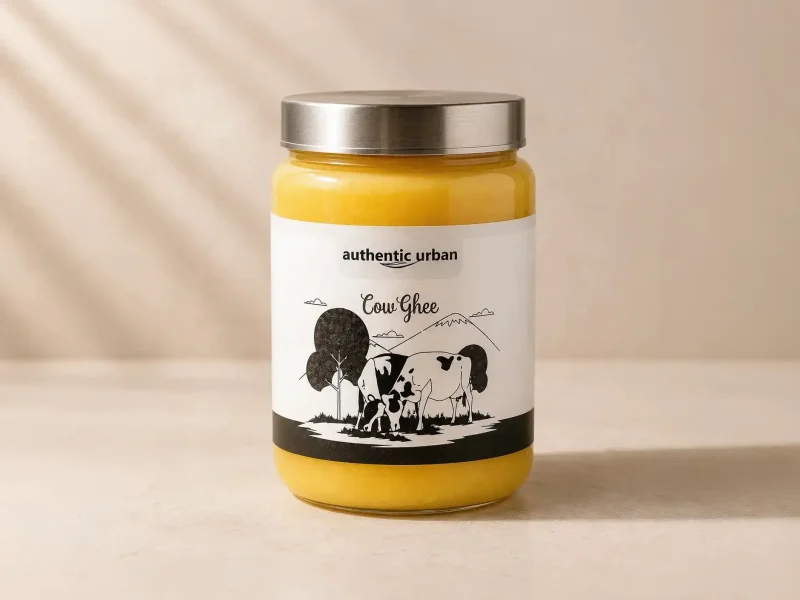 1 Litre
Oats sheera with jaggery
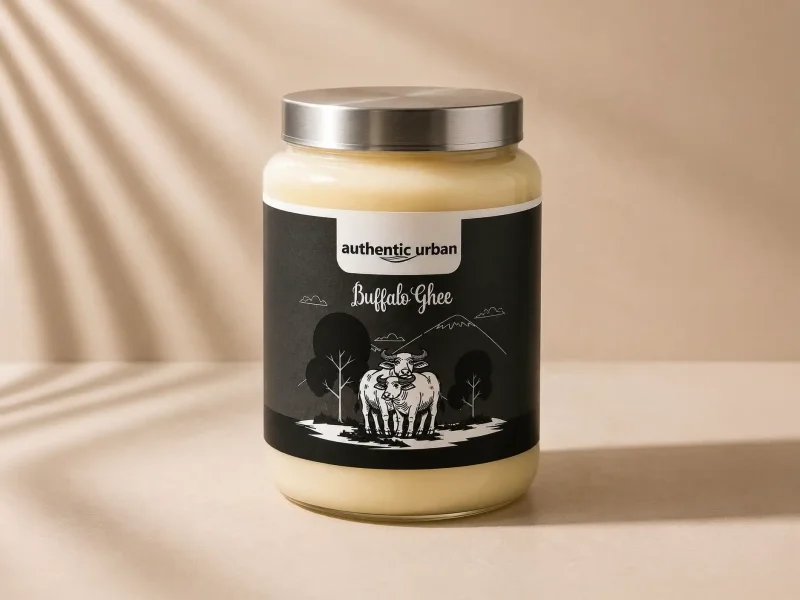 1 Litre
Each order is cooked after you place it, and the packing video is of that batch. Past order videos are on the shop.
FAQ
Can I make ghee oatmeal in the microwave?
Yes. Put 40 g of rolled oats, 200 ml of milk, and 100 ml of water in a large bowl, because milk rises fast. Cook on high for 2 minutes, stir, then 1 to 2 minutes more in 30 second bursts until thick. Let it stand a minute, then stir in 1 teaspoon of ghee. Add the ghee after cooking, not before, so it does not pool and spit.
Can I sweeten ghee oats with jaggery or dates instead of sugar?
Yes, and jaggery goes well with ghee, but it is still sugar. Grate a teaspoon of jaggery over the bowl once it is off the flame, or cook two chopped dates in with the oats. ICMR-NIN's 2024 guidelines ask adults to avoid added sugar or keep it to 20 to 25 g a day, and jaggery and honey count in that total. A ripe banana often makes any sweetener unnecessary.
Can I make ghee oatmeal with water instead of milk?
Yes. Use 250 to 300 ml of water for 40 g of rolled oats and cook the same way. The bowl is thinner and less sweet, so the ghee does more of the work: toast the oats in the teaspoon of ghee first for 2 minutes, which gives a nutty taste that milk usually supplies. Water oats suit the masala version best, where the tadka brings the flavour.
Is ghee better than butter in oatmeal?
For toasting the oats, yes. Butter holds water and milk solids that brown and can burn in the minute it takes to toast oats, while ghee has had both cooked out. For stirring in at the end, both work; butter tastes creamier and ghee tastes nuttier. Salted butter adds salt, so cut the pinch in the pot. A teaspoon of either adds about the same calories.
Can I eat ghee oatmeal every day?
Most healthy adults can, if the bowl stays at about a teaspoon of ghee and little added sugar. That teaspoon is part of the 1 to 2 teaspoons of ghee ICMR-NIN suggests for the whole day, so the rest of the day's meals need less. Change the toppings through the week, and switch between sweet and masala oats, so breakfast does not become oats and sugar every morning.
Can I cook steel-cut oats in a pressure cooker?
Yes, and it saves most of the 30 minutes. Toast 40 g of steel-cut oats in 1 teaspoon of ghee in the cooker for 2 minutes, add 400 ml of water or half milk and half water, and cook for 2 whistles on medium. Let the pressure drop on its own, then stir. Milk can froth up through the vent, so keep the cooker less than half full.
About the editorial team
Authentic Urban TeamBilona ghee makers, Gir Somnath, Gujarat
We are the Parmar family in Gir Somnath, Gujarat. We have made ghee here since 2016 and sold it online since 2025. We make only Bilona ghee, test it every month, and anyone is welcome to visit and watch it being made. Our Gir cows and Jafarabadi buffalo are grass-fed village animals that graze near the Gir forest, with no hormones or milk boosters. We set their milk to curd, churn it, and cook the makkhan on a wood chulha. These articles come from that kitchen and from what customers ask us on WhatsApp. We are ghee makers, not doctors.
Sources
- Cereals, oats, regular and quick, not fortified, dry (FDC ID 173904), SR Legacy, USDA FoodData Central. Checked 28 Sep 2026.
- Butter oil, anhydrous (FDC ID 173412), SR Legacy, USDA FoodData Central. Checked 28 Sep 2026.
- Milk, whole, 3.25% milkfat, with added vitamin D (FDC ID 171265), SR Legacy, USDA FoodData Central. Checked 28 Sep 2026.
- Bananas, raw (FDC ID 173944), SR Legacy, USDA FoodData Central. Checked 28 Sep 2026.
- Nuts, walnuts, english (FDC ID 170187), SR Legacy, USDA FoodData Central. Checked 28 Sep 2026.
- Dietary Guidelines for Indians, 2024 (Guideline 1 sugar, Guideline 7 visible fats, Table 15.2 food processing), ICMR-National Institute of Nutrition. Checked 28 Sep 2026.
- 21 CFR 101.81: Health claims, soluble fiber from certain foods and risk of coronary heart disease, US Food and Drug Administration (Code of Federal Regulations). Checked 28 Sep 2026.